Cancer Care
 Heart Health
 Bone Health
 Brain & Spine Care
 Transplant


Dr Tseng Leng Aun Arthur
Obstetrician & Gynaecologist


Source: Getty Images
 Add as a preferred source on Google
Obstetrician & Gynaecologist
Kegel exercises are a common pelvic floor practice that many women have heard of, but not everyone understands their purpose or when they are needed. This article explains the benefits of Kegel exercises, and how to perform them correctly — including how they can also benefit men.
Kegel exercises, commonly referred to as Kegels, are a set of simple exercises designed to strengthen the pelvic floor muscles. These muscles play a crucial role in supporting the vagina, uterus, bladder, small intestine, and rectum.
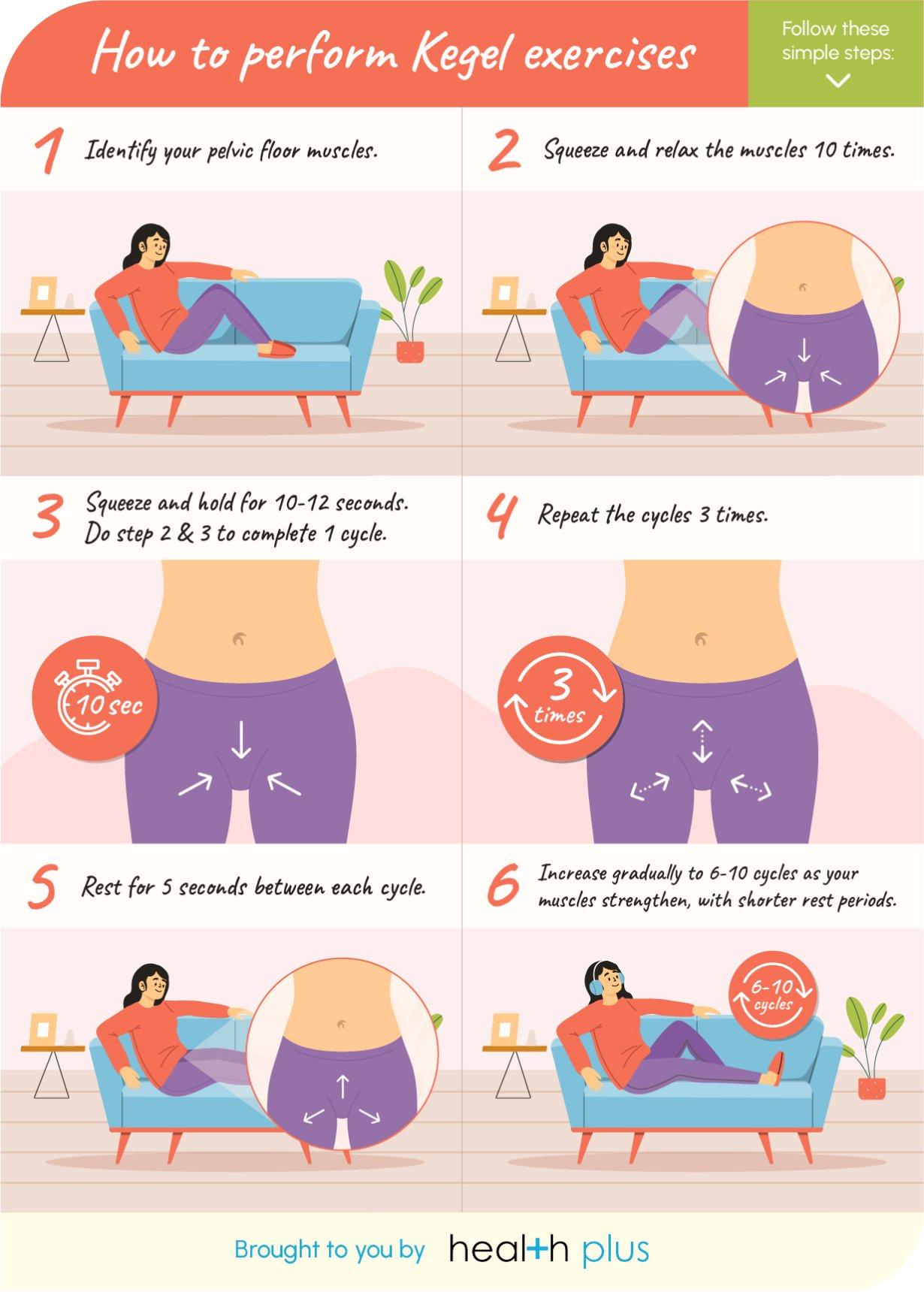
The easiest way to identify these muscles effectively is to briefly stop the flow of urine during urination, while seated on the toilet bowl. Alternatively, imagining yourself sitting on a marble and attempting to lift it can also aid in identifying and engaging the right muscles.
Kegel exercises help strengthen the pelvic floor muscles, which support the bladder, uterus, and bowel. They are commonly recommended for women who have recently given birth or those experiencing pelvic floor weakness.
They may help to:
Kegel exercises may also be incorporated into fitness routines, including by athletes, to support core strength and stability.
It's advisable to consult with healthcare professionals before starting these exercises, especially if you have specific health concerns or conditions.
Yes, Kegel exercises can also benefit men. Strengthening the pelvic floor muscles may help:
For men, Kegels involve tightening the muscles used to stop urination or prevent passing gas — similar to women. As with any exercise, proper technique and regular practice are important to achieve results.
Kegel exercises can be effective when performed correctly and consistently. They help strengthen the pelvic floor muscles, which support the bladder, uterus, and bowel. Over time, this may improve bladder and bowel control and reduce the risk of pelvic organ prolapse.
Results typically take several weeks, and consistency is key. If symptoms persist, it is advisable to seek medical advice.
It's generally recommended to perform Kegel exercises regularly. Begin with 3 cycles of 10 short squeezes and one long squeeze daily, gradually increasing to 6 to 10 sets per day.
You can do Kegel exercises discreetly at just about any time, whether you're sitting at your work desk or relaxing on the couch. With consistent daily practice, you can seamlessly integrate pelvic floor exercises (PFEs) into various activities, reaching a reflexive level of training. This level doesn't demand significant mental effort or concentration, allowing your efforts to go unnoticed by people around you.
If your pelvic muscles are weak, you may find it helpful to do the exercises while lying down. Otherwise, Kegel exercises can be performed while standing, sitting, or lying down. What's more important is knowing how to identify and use the correct set of muscles.
Firstly, Kegel exercises should not cause any pain. If you find that you have pain or soreness in your stomach or lower back, or a headache after performing them, you may be clenching the wrong muscles or holding your breath. You should breathe normally and maintain your focus so that you are only tightening or releasing the pelvic floor muscles. Avoid tightening other muscles in the abdomen, thighs or buttocks.
It may take 6-8 weeks of consistent Kegels exercises to see improvement. For example, if you have urinary incontinence, you may experience less leakage.
If you suspect incontinence or other urinary issues persist despite Kegel exercises, schedule an appointment with a urogynaecologist for diagnosis and guidance on the next steps.
Yes, Kegel exercises are often recommended during pregnancy to support pelvic health and prepare for childbirth. Engaging in regular Kegel exercises helps strengthen the pelvic floor muscles, which can be particularly beneficial in preventing issues such as urinary incontinence and supporting the additional strain placed on the pelvic region during pregnancy.
Kegel exercises are considered a valuable component of antenatal care, contributing to overall maternal well-being and postnatal recovery. As with any exercise regimen during pregnancy, it's advisable to consult with healthcare professionals for personalised guidance.
Yes, it is possible to do Kegel exercises incorrectly. Common mistakes include tightening the wrong muscles (such as the abdomen, thighs, or buttocks), holding your breath, or pushing down instead of lifting the pelvic floor muscles.
Doing Kegels incorrectly may lead to little or no improvement, and in some cases, can worsen symptoms like pelvic tension or discomfort. To perform them properly, focus on gently tightening the muscles you would use to stop passing urine or gas, while breathing normally and keeping other muscles relaxed.
If you are unsure whether you are doing Kegels correctly or are not seeing results, consider speaking with a healthcare professional or pelvic floor physiotherapist for guidance.
Yes, Kegel exercises can benefit both men and women. These exercises strengthen the pelvic floor muscles, which support the bladder and bowel in both sexes, and the uterus in women.
For women, Kegels may help improve bladder control, support pelvic organs, and aid recovery after pregnancy and childbirth. For men, they can help with urinary control, especially after prostate surgery, and may also support sexual function.
When performed correctly and consistently, Kegel exercises can improve pelvic floor strength and function over time, regardless of gender.
At Gleneagles Hospital, our experienced urogynaecologists, urologists and general surgeons provide comprehensive care for women's health concerns — from diagnosis through to treatment. If you’re experiencing symptoms of urinary incontinence or have concerns related to your gynaecological health, we’re here to help.
Find a specialist
Dr Henry Cheng, an obstetrics and gynaecology specialist, talks about the Zika virus and its effects on expecting mothers.

Dr Leong Hoe Nam, an infectious disease specialist at Mount Elizabeth Novena Hospital, provides the answers to important questions about the Zika virus.

A monthly breast self-examination 7 – 10 days after your period starts can save your life.

Dr Kelly Loi gives us the facts regarding infertility and the options available when you have problems conceiving.

For those who may be planning on having a baby only after they step over the magic number of 40, here are some issues to consider.

Dr Kelly Loi discusses fibroids, how they affect fertility in women, and the ways to identify, evaluate and manage fibroids.

Our breast surgeon explains how to understand your risk, warning signs to know, why screening matters even when you feel well, and what surgery can look like today.

As knee osteoarthritis progresses, everyday activities can become more difficult. Our pain specialist and orthopaedic surgeon explain the treatment options available and how to find the right approach for you.

Dr Edwin Chng from Parkway Shenton explains why weight loss can slow down during medical weight management, and when it may be time to review your treatment plan.

Prostate cancer is common, often silent, and still diagnosed too late in Singapore. Urologist Dr Tan Yung Khan on what every man should know about screening, diagnosis, and treatment.

We answer common questions about haze, and how this can affect common chronic lung conditions such as asthma and chronic obstructive pulmonary disease (COPD), and 8 simple tips to protect ourselves against it.

Our neurosurgeon, Dr Vincent Ng, explains the factors specialists consider when deciding whether a brain aneurysm should be monitored or treated, and what the different treatment options involve.
Mount Elizabeth Hospitals are part of IHH Healthcare, one of the world’s largest integrated healthcare networks.

Download the MyHealth360 app to access an array of medical services conveniently.


Get trusted medical advice from our specialists, dietitians and physiotherapists directly in your inbox.
Subscribe