


 Cancer Care
 Heart Health
 Bone Health
 Brain & Spine Care
 Transplant


Dr Leong Hoe Nam
Infectious Disease Physician

Source: Shutterstock
Infectious Disease Physician
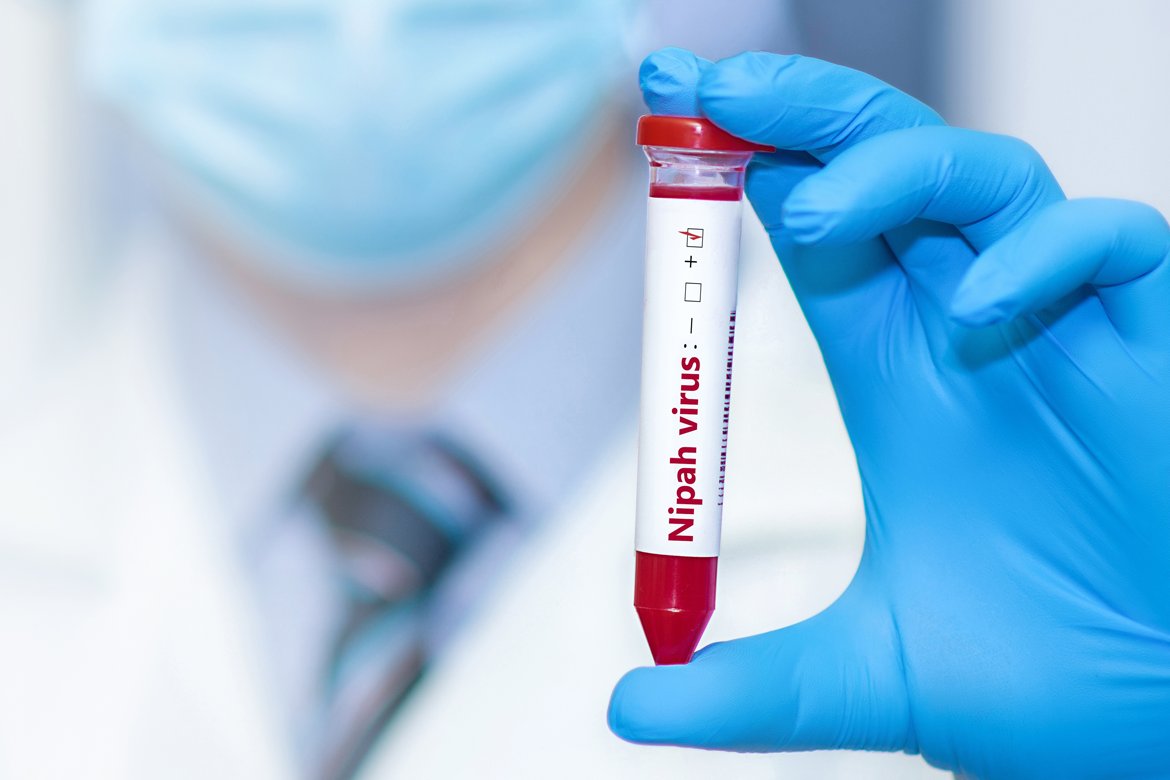
News reports on the 2026 Nipah virus outbreak in India have raised questions for people in Singapore. While the overall risk to Singapore remains low, understanding what the Nipah virus is, its symptoms, who is at risk, and when to seek medical attention is crucial, especially for travellers or those planning to travel.
The Nipah virus (NiV) is an RNA zoonotic virus. It is primarily an infection confined within animals, but it may spread to humans. Fruit bats, specifically the flying fox bats, are the natural hosts of the virus. As the bats leave their habitats for food, it can also spread from pigs, cats, dogs, horses, and goats. Contact with infected animals can lead to transmission to humans and thereafter human-to-human transmission.
Nipah virus infections can range from asymptomatic to mild illness to severe neurological disease and respiratory illness, including encephalitis (inflammation of the brain), seizures, and pneumonia. In cases where the virus causes severe illness, fatality rates may range from 40% to 75%. Long-term neurologic conditions have been reported in some people who have recovered.
Most recently, India’s West Bengal state has reported an outbreak of the Nipah virus, with two confirmed cases since December 2025. These were two healthcare workers. So far, of the 200 contacts that have been tracked and tested, none have fallen ill further.
Symptoms of the Nipah virus typically appear 4 – 14 days after exposure, although longer incubation periods of up to 45 days have been reported.
Symptoms of NiV may include:
Because early signs can mimic common viral illnesses, including influenza or influenza-like illnesses, differentiation is extremely difficult. Travel and exposure history help healthcare providers assess risk.
Diagnosis relies on:
Nipah virus can spread through:
Prolonged or close exposure to patients increases risk. As the individual’s illness progresses, the virus shedding increases, peaking at day 5 - 7 of illness when the illness is expected to be most severe.
Nipah virus was first identified among pig farmers in Singapore and Malaysia in 1998 and 1999, with over 100 deaths and 300 cases reported. Since then, it has also been detected in India, Bangladesh, and the Philippines. In Singapore, no healthcare workers became infected because of the personal protective equipment used to prevent cross-transmission
Although Nipah virus is not as contagious as viruses like influenza or COVID-19, it can still spread from person to person under certain conditions. The virus basic reproduction number is 0.5, meaning that it spreads to one person for every two confirmed cases.
COVID-19 and influenza have a higher number of 1.6 to 2, while measles and chicken pox can be as high as 15. This means that the Nipah virus is likely to be less contagious but more severe in some cases, while COVID-19 and measles / chickenpox spreads far easily between people.
The World Health Organization (WHO) also reports that it has a high fatality rate, which based on past outbreaks has ranged from roughly 40% to 75%.
Overall, the current circulating strains of Nipah virus is not expected to have changed significantly in transmission compared to the strain in 1999. Hence the WHO does not expect Nipah virus to spread like COVID-19.
Early symptoms of Nipah virus can resemble common respiratory infections such as influenza, COVID-19 or RSV. However, there are important differences in severity, transmission and prevention.
Because early symptoms can overlap, travel history and exposure risk are key factors that help doctors distinguish Nipah virus from more common viral infections.
Currently, there are no approved vaccines or curative treatments for Nipah virus. In contrast, vaccines are widely available for influenza and COVID-19, and help reduce the risk of severe illness.
Higher-risk groups include:
Children, older adults, and individuals with weakened immunity may be more likely to develop severe disease.

If you think you’ve been exposed to the Nipah virus:
People travelling to affected areas or who may have close contact with confirmed patients are encouraged to adopt these health precautions:
These steps are recommended by Singapore’s Ministry of Health (MOH) and international health bodies such as the World Health Organization.
While Nipah virus infections are currently rare in Singapore, early medical assessment is important if you feel unwell after travel or possible exposure.
A GP can assess your symptoms, review your travel and exposure history, and determine whether further testing, monitoring or referral is needed. Early evaluation also helps rule out more common conditions such as flu or COVID-19.
If you’re unsure, it’s better to be assessed early.
Seeing a doctor can provide clarity, reassurance and timely care if needed.
A: If you feel unwell within a few weeks of travelling to India or other areas with reported Nipah virus cases, you should seek medical advice promptly. Inform your doctor about your recent travel and any possible exposure to sick individuals or animals.
A: Symptoms of Nipah virus often start with fever, headache, muscle pain, and cough. In more serious cases, symptoms can progress to drowsiness, confusion, seizures, breathing difficulties, or inflammation of the brain.
A: Consider seeing a doctor if you have mild symptoms such as fever or headache after travelling to an affected area, as it can help rule out serious conditions and provide reassurance. Early assessment is especially important if symptoms persist or worsen.

Most strokes are preventable. Dr Michael Lim, cardiologist, talks about the importance of prevention and what you should do.

Allergies are at best annoying, and at worst life-threatening. Here's how to identify an allergy when you have one, and what to do when an allergy acts up.

Your morning cup does way more than boost your energy. Dr Ooi Yau Wei talks about how caffeine affects your health.

Whether you’re heading for a summer vacation or going to see the northern lights in Iceland, here are 13 dreadful travel diseases and what you should know about them.
Someone around you starts wheezing and coughing vigorously. What should you do?

Heading off on holiday? Whether you plan to lie on the beach or explore a new city, prepare for any eventuality with our packing list.
Mount Elizabeth Hospitals are part of IHH Healthcare, one of the world’s largest integrated healthcare networks.

Download the MyHealth360 app to access an array of medical services conveniently.


Get trusted medical advice from our specialists, dietitians and physiotherapists directly in your inbox.
Subscribe