-
-
Our Expertise
 Cancer Care
 Heart Health
 Bone Health
 Brain & Spine Care
 Transplant



Source: Shutterstock
What is a Colonoscopy and How to Prepare for It?
Last updated: Monday, February 1, 2021 | 7 min reading time
 Add as a preferred source on Google
Just one colonoscopy every 10 years can help to prevent colon cancer.
Colorectal cancer is the most common cancer in Singapore. Early colorectal cancer may not come with any symptoms, and is thus difficult to detect without regular screening.
Early detection of colon cancer through screening methods such as colonoscopy can yield survival rates of up to 95%.
What is a colonoscopy?
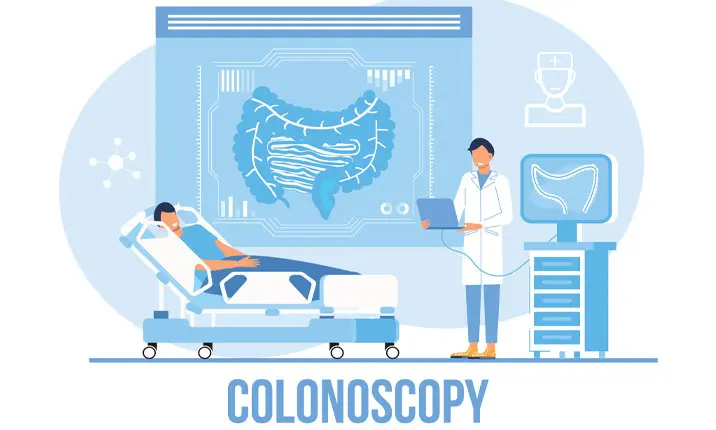
A colonoscopy is a procedure which allows your doctor to visually check the lining of the colon without requiring any surgery. The colonoscope – a long and flexible tube carrying a small camera – is carefully inserted into the colon via the anus, relaying images to a screen and allowing doctors to check for problems along the entire length of the colon. The colonoscope is only around the size of a little finger, meaning that your doctor will be able to guide it easily and safely through the colon.
Is a colonoscopy painful?
Patients are usually given sedatives before a colonoscopy is performed. The sedative makes you feel sleepy so you won't be able to feel anything during the procedure.
You may feel some mild cramping after a colonoscopy if air was introduced into your bowel during the procedure. Additionally, there may be some mild discomfort the day after the colonoscopy if additional procedures, such as a biopsy, is performed.
How to prepare for a colonoscopy?

You will be required to undergo a strict diet of only clear liquids (water, apple juice, clear broths, etc.) for several days prior to the procedure. Your doctor will also provide you with a special laxative solution to be taken the day before the colonoscopy in order to clean out the colon and ensure that it is free of solid waste. Failure to adhere to this diet or take the solution would leave solid waste in the colon and your doctor might then be forced to reschedule the procedure.
You may also be required to take certain medications or refrain from others. Consult your doctor regarding your specific situation.
How is a colonoscopy performed?
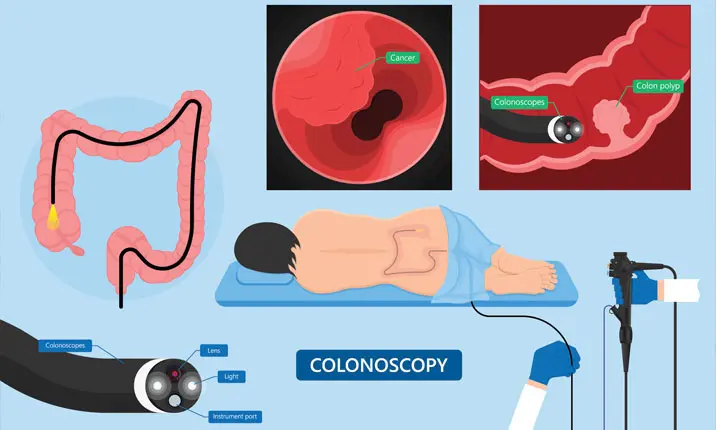
During the procedure, the patient will be sedated and laid on the side with the knees tucked forward. Air is then used to slightly inflate the colon to straighten out the colon lining, allowing the doctor to carefully examine it with the colonoscope. This part of the procedure might take about half an hour, as the doctor will have to carefully navigate the colonoscope through the bends and twists in the colon in order to thoroughly examine every part.
The removal of any colon polyps, called a polypectomy, can also be performed at this stage. Additionally, a biopsy may be carried out, in which several small tissue samples are taken for further inspection under a microscope. This would allow your doctor to check for possible infections and inflammation. Such polypectomies and biopsies are usually painless and go unnoticed by the patient. Depending on what is required, the entire procedure may be significantly lengthened.
What are the risks of a colonoscopy?
After the procedure, it is not unusual for patients to experience some discomfort due to the air used to inflate the colon, but this tends to be slight and only temporary. Patients are often allowed to leave the hospital within a couple of hours. However, as it might take several more hours for the effects of the sedative to completely wear off, patients are usually advised to have someone accompany them home to rest for the rest of the day.
Some complications may arise if the patient responds poorly to the sedatives, but on the whole, colonoscopy is a safe procedure. If polypectomies or biopsies are performed, some bleeding might persist for several days after the procedure.
Under rare circumstances, the wall of the colon might get damaged during the colonoscopy and bleeding might result. Contact your doctor immediately if you experience vomiting, severe abdominal pains, fever or heavy bleeding as some cases could potentially be life-threatening.
Who needs a colonoscopy?
Because colon polyps take a long time to become cancerous, a routine colonoscopy every 10 years would help to prevent the vast majority of colon cancer cases, especially for people over the age of 50. Those who have a known history of polyps or colon cancer may be recommended by doctors to consider a more frequent routine.
Furthermore, your doctor might recommend a colonoscopy if you experience symptoms that suggest potential abnormalities in your colon. The symptoms can include blood in the stool, changes in bowel habits (constipation or diarrhoea), abnormal weight loss and abdominal pain. Colonoscopy screenings may also be recommended to check for inflammatory bowel diseases such as Crohn's disease or ulcerative colitis.
Do consult your doctor to assess your suitability for a colonoscopy screening.
Does a Colonoscopy Hurt? (2020, January 03) Retrieved December 04, 2020, from https://www.healthline.com/health/is-a-colonoscopy-painful
Related Articles
View all
Take Charge, Take Action: Conduct Your Own Breast Examination
A monthly breast self-examination 7 – 10 days after your period starts can save your life.

Heart Screening Checklist for a Healthy Heart
The problem with heart disease – aside from the fact that it’s heart disease – is that, without health screenings, it’s unlikely you will know there is anything wrong until it is too late.

Myth busted! 8 Common Myths About Breast Screening
Eight myths you might believe about breast cancer screening, and the truth about it.

Know a Woman Above 40? Encourage Them to Take This Positive Step
More women are being claimed by breast cancer now than before. Love them by encouraging them to go for breast screening.

Simple, Radical, Nipple Sparing? Making Sense of Mastectomy (Breast Removal) Surgery
Dr Tan Yah Yuen, general surgeon at Mount Elizabeth Hospitals, answers the questions you may have about mastectomies.

Surviving Breast Cancer: Should I Save My Breast?
Dr Wee Siew Bock, breast surgeon at Mount Elizabeth Hospital, address your questions and concerns about breast conserving surgery (lumpectomy).
Latest Articles
View All
Ask our Doctor: What are Breast Cancer Risks and Early Signs?
Our breast surgeon explains how to understand your risk, warning signs to know, why screening matters even when you feel well, and what surgery can look like today.

Knee Osteoarthritis: What To Do When Knee Pain Gets Worse?
As knee osteoarthritis progresses, everyday activities can become more difficult. Our pain specialist and orthopaedic surgeon explain the treatment options available and how to find the right approach for you.

Weight Loss Has Plateaued. Does Your Treatment Need to Change?
Dr Edwin Chng from Parkway Shenton explains why weight loss can slow down during medical weight management, and when it may be time to review your treatment plan.

Ask Our Doctor: How Is Prostate Cancer Detected and Diagnosed?
Prostate cancer is common, often silent, and still diagnosed too late in Singapore. Urologist Dr Tan Yung Khan on what every man should know about screening, diagnosis, and treatment.

A Guide to Haze Season in Singapore: 8 Tips to Stay Healthy
We answer common questions about haze, and how this can affect common chronic lung conditions such as asthma and chronic obstructive pulmonary disease (COPD), and 8 simple tips to protect ourselves against it.

Diagnosed With a Brain Aneurysm? Here's What Happens Next
Our neurosurgeon, Dr Vincent Ng, explains the factors specialists consider when deciding whether a brain aneurysm should be monitored or treated, and what the different treatment options involve.