-
-
Our Expertise
 Cancer Care
 Heart Health
 Bone Health
 Brain & Spine Care
 Transplant


Source: Shutterstock
What to Do During an Allergic Reaction
Last updated: Wednesday, December 24, 2025 | 1 min reading time
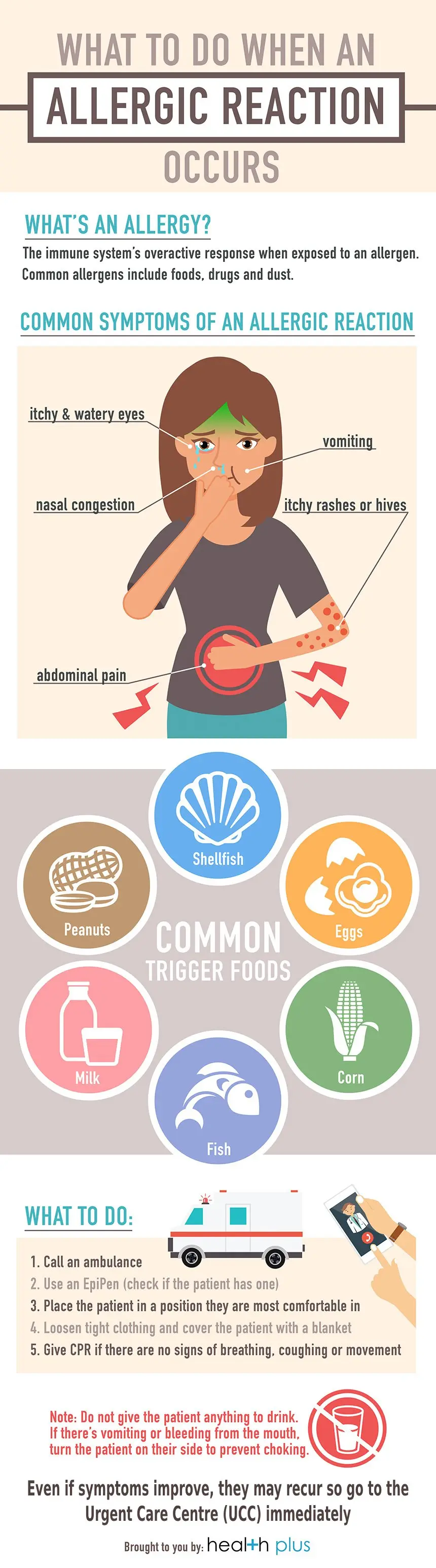
What is an allergy?
An allergy occurs when the immune system overreacts to a usually harmless substance, known as an allergen. Common allergens include foods, medications, insect stings, and environmental triggers such as dust or pollen.
Common food allergens include peanuts, shellfish, milk, eggs, fish and corn.
Allergic reactions can range from mild to severe, and symptoms may appear within minutes or develop over a few hours.
Common allergy symptoms
Mild to moderate symptoms
These symptoms are uncomfortable but usually not life-threatening:
- Skin: Hives, redness, itching, rashes, or swelling of the face, lips or eyes
- Respiratory: Sneezing, runny or blocked nose, itchy or watery eyes, coughing
- Digestive: Stomach cramps, nausea, vomiting, diarrhoea
- Mouth: Tingling or itching in or around the mouth
Severe symptoms (Anaphylaxis – a medical emergency)
Anaphylaxis is a sudden, severe allergic reaction that can be life-threatening:
- Breathing: Difficulty breathing, wheezing, noisy breathing, persistent cough, chest tightness, hoarse voice
- Airway: Swelling of the tongue or throat, or a feeling that the throat is closing
- Circulation: Dizziness, light-headedness, fainting, pale or bluish skin, weak pulse
- Other signs: Widespread hives, confusion, loss of consciousness, or a sudden sense of severe distress
When to seek urgent care
Call an ambulance, or seek immediate medical attention at our Paediatric Urgent Care Centre (PUCC) or Urgent Care Centre if a child or adult experiences symptoms of anaphylaxis, such as throat swelling, severe difficulty breathing, or collapse. Prompt treatment is critical, as anaphylaxis can be life-threatening.
If you see someone experiencing an allergic reaction: here's what to do
- Stay calm and assess the symptoms. Look for signs of a severe reaction, such as difficulty breathing, throat swelling, dizziness, or collapse.
- Call for emergency help immediately if symptoms are severe. If you suspect anaphylaxis, call an ambulance straight away. Do not wait to see if symptoms improve.
- Use an adrenaline auto-injector if available. If the person has been prescribed an adrenaline (epinephrine) auto-injector, help them use it as instructed. Adrenaline is the first-line treatment for anaphylaxis.
- Position the person safely. Help them lie flat with their legs raised if possible. If breathing is difficult, they may sit up slightly. Do not allow them to stand or walk.
- Loosen tight clothing and cover patient with a blanket
- Monitor closely while waiting for help. Stay with the person and watch their breathing and level of responsiveness. If they become unresponsive and are not breathing normally, begin basic life support if you are trained to do so.
- Do not give food or drink. This may worsen symptoms or increase the risk of choking.
- Give CPR if there are no signs of breathing, coughing or movement.
- Seek medical review even if symptoms improve. Symptoms can return hours later, so medical assessment is important even after initial recovery.
Need urgent medical care in Singapore?
Our Urgent Care Centre (UCC) is here for you — around the clock, around the corner. Get timely treatment and support 24/7, all day, every day of the year. Learn more about our waiting times, fees, ambulance options, and other services here.
Related Articles
View all
Could You be Allergic to these Common Foods? Here's How to Tell
Allergies are at best annoying, and at worst life-threatening. Here's how to identify an allergy when you have one, and what to do when an allergy acts up.

How to Help Someone Survive an Asthma Attack
Someone around you starts wheezing and coughing vigorously. What should you do?

5 Misconceptions about Asthma and Exercise
Can asthma sufferers continue to exercise and lead active lifestyles?

How to Fight Off the Flu
What is influenza, and what flu vaccinations can you get to protect yourself against it?

Asthma: Symptoms, Causes & Treatments
Struggling to manage your asthma, or know someone who is? Here's what you can do to cope with it.

8 Conditions That Could Be Causing Your Cough
A cough can sometimes go away on its own, but what does it mean if you can't stop coughing?