


-
-
Our Expertise
 Cancer Care
 Heart Health
 Bone Health
 Brain & Spine Care
 Transplant


Aortic Valve Stenosis
What is aortic valve stenosis?
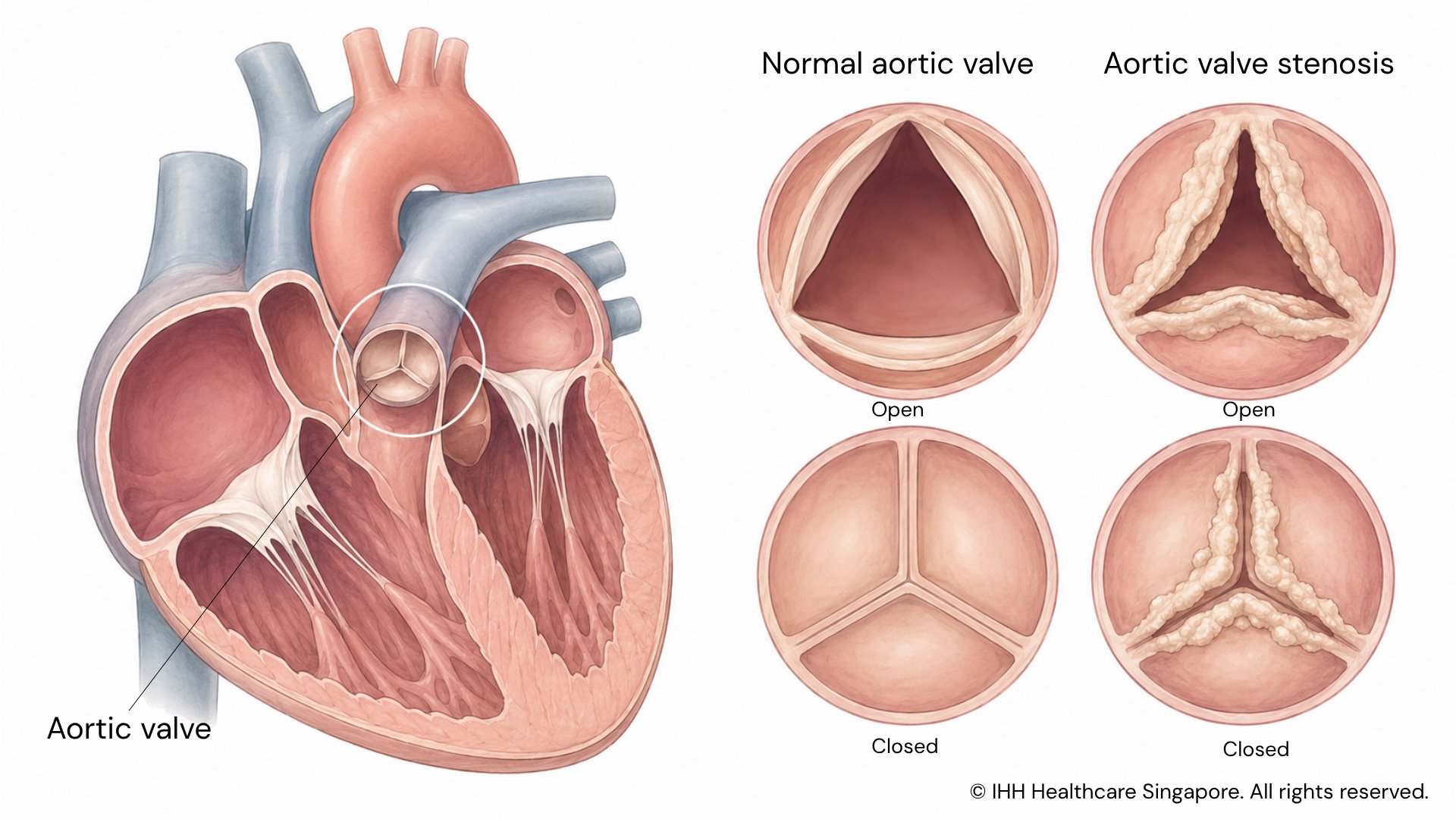
Aortic valve stenosis is a type of heart valve disease in which the aortic valve – the valve that controls blood flow out of the heart's main pumping chamber (the left ventricle) into the aorta – becomes narrowed.
This restricts blood flow to the rest of the body and forces the heart to work harder to pump blood through the narrowed opening.
Over time, this extra strain can cause the heart muscle to thicken and eventually weaken, leading to complications such as heart failure if left untreated.
Types of aortic valve stenosis
Aortic valve stenosis is generally categorised by its underlying cause, which also affects the age at which it tends to develop:
- Degenerative (calcific) aortic valve stenosis: The most common form, caused by calcium build-up on the valve over decades. It typically affects adults from their 70s onwards.
- Congenital bicuspid aortic valve disease: Some people are born with an aortic valve that has two leaflets instead of the usual three. This uneven structure wears down faster, often causing stenosis from the 50s or 60s onwards, or occasionally earlier.
- Rheumatic aortic valve stenosis: A rarer cause in Singapore today, resulting from scarring after untreated or inadequately treated rheumatic fever in childhood.
How common is aortic valve stenosis?
Aortic valve stenosis is a common heart valve disease in older adults, with prevalence increasing with age. Based on US data, it affects an estimated 1–2% of adults over 65, rising to approximately 12% among those over 75.
What are the symptoms of aortic valve stenosis?
Aortic valve stenosis often develops gradually over many years, and many people have no noticeable symptoms in the early or mild stages. Symptoms typically emerge once the narrowing becomes moderate to severe, and may include:
- Shortness of breath, especially during physical activity
- Chest pain or tightness (angina), particularly on exertion
- Fatigue or reduced ability to exercise
- Dizziness or fainting (syncope), especially during physical exertion
- Heart palpitations or an irregular heartbeat
- Swelling in the ankles or feet
- A heart murmur, which your doctor may detect during a routine check-up before you notice any symptoms yourself
Is aortic valve stenosis serious?
The severity of aortic valve stenosis ranges from mild to severe, and its seriousness depends largely on how narrow the valve has become and whether symptoms have appeared. Mild stenosis is often monitored without immediate treatment, while severe stenosis – particularly once symptoms develop – is a serious condition that requires timely medical evaluation, as it can progress to heart failure or other life-threatening complications if untreated.
What causes aortic valve stenosis?
Aortic valve stenosis develops when the aortic valve's leaflets become thickened, stiffened, or fused, restricting how well they open. The underlying causes generally fall into three categories, corresponding to the types described above: age-related calcium build-up, a congenital bicuspid valve, or scarring from rheumatic fever.
How does aortic valve stenosis form?
In the most common, calcific form, calcium deposits gradually accumulate on the valve leaflets over many years – similar to the way mineral deposits can build up in pipes. This build-up stiffens the leaflets and narrows the opening they form when the heart contracts, restricting blood flow. In bicuspid and rheumatic disease, an already abnormal or scarred valve structure tends to accelerate this same calcification process, which is why symptoms can appear earlier in these patients.
What are the risk factors for aortic valve stenosis?
A number of factors can increase the likelihood of developing aortic valve stenosis:
- Age. Risk increases significantly from the 60s and 70s onwards.
- Bicuspid aortic valve. A congenital condition that predisposes the valve to earlier wear and calcification.
- History of rheumatic fever. Can cause scarring that predisposes the valve to narrowing.
- Chronic kidney disease. Associated with abnormalities in calcium metabolism that may accelerate valve calcification.
- High blood pressure and high cholesterol. Share risk mechanisms with atherosclerosis and may contribute to valve calcification.
- Smoking. A modifiable risk factor associated with faster disease progression.
- Male sex. Men under 60 tend to be diagnosed with aortic valve stenosis at a higher rate than women, although this difference becomes more balanced in older age groups, particularly after 70.
What are the complications and related diseases of aortic valve stenosis?
If left untreated, aortic valve stenosis can lead to:
- Heart failure
- Heart arrhythmias (irregular heartbeats)
- Blood clots
- Infective endocarditis (infection of the heart valve)
- Sudden cardiac death, in severe, symptomatic cases
What happens if aortic valve stenosis is left untreated?
Once aortic valve stenosis becomes severe and symptoms such as breathlessness, chest pain, or fainting appear, the condition tends to progress more quickly, and outlook without treatment change meaningfully. This is why symptomatic severe aortic valve stenosis is generally regarded by cardiologists as requiring prompt evaluation for valve replacement, rather than continued observation.
How do you prevent aortic valve stenosis?
Because most cases of aortic valve stenosis are related to age-related calcification or a congenital valve structure, the condition cannot always be prevented. However, some steps may help reduce your risk or slow its progression:
- Manage cardiovascular risk factors such as high blood pressure, high cholesterol, and diabetes
- Avoid smoking
- Seek prompt treatment for streptococcal throat infections to help prevent rheumatic fever
- Attend regular health screenings, especially if you have a family history of heart valve disease or a known bicuspid aortic valve
If you have been diagnosed with mild or moderate aortic valve stenosis, regular follow-up echocardiograms are the most important way to catch progression early, before symptoms significantly affect your quality of life.
This coverage checker is brought to you by Health Insured, an online resource that helps you understand your health coverage in Singapore.
This page has been reviewed by our medical content reviewers.
RELATED ARTICLES
View all
What Foods Are Good for Heart Health?
Our cardiologist and dietitian share what to eat, what to limit, and what else matters for a stronger heart.

Heart Disease in Women: Symptoms and Why It Is Often Missed
Heart disease is often thought of as a man's condition, yet cardiovascular disease accounts for 1 in 3 deaths among women in Singapore. Here’s how to recognise it early.

What Does a Heart Attack Feel Like for Women?
A heart attack can feel and present differently for women. Our cardiologist at Gleneagles Hospital explains what to watch for, and why it's often missed.
Treating Mitral Valve Regurgitation Without Open-Heart Surgery
Mitral valve regurgitation can now be treated without open-heart surgery through a minimally invasive procedure known as transcatheter edge-to-edge repair (TEER) — using systems such as MitraClip and PASCAL.
8 Common Heart Scans and Tests
Dr Ong Hean Yee, cardiologist, shares 8 common scans your doctor may perform to scope out your heart health.

What Are Your Treatment Options for Congestive Heart Failure?
Dr Lim Choon Pin, cardiologist at Mount Elizabeth Hospitals, explains your treatment options for congestive heart failure (CHF).
Need help?
For enquiries, please call
+65 6250 0000 (Orchard) or +65 6898 6898 (Novena)
For appointment bookings, please WhatsApp
+65 8111 7777 (Orchard) or +65 8111 5777 (Novena)


