


 Cancer Care
 Heart Health
 Bone Health
 Brain & Spine Care
 Transplant



Dr Heywood Rebecca Louise
Otorhinolaryngologist


 Add as a preferred source on Google
Otorhinolaryngologist
Hearing loss that affects only one ear is often underestimated – by patients and those around them alike. Known as single-sided deafness, this condition can affect hearing ability, communication and quality of life in ways that are not always visible. Understanding the causes and treatment options can help people regain confidence and reconnect with the world around them.
Single-sided deafness (SSD) refers to significant or complete hearing loss in one ear, while hearing in the other ear is normal or near-normal. For many years, SSD was largely overlooked – most people were simply told that no intervention was needed because the other ear was functioning. In reality, hearing with two ears (binaural hearing) plays a crucial role in how we understand speech, locate sounds and feel secure in our surroundings.
Hearing is not simply about volume. Our brains rely on input from both ears to:
When one ear stops working, the brain loses important timing and directional cues. This can make everyday listening situations unexpectedly tiring and frustrating.
People with SSD often report challenges that go beyond simply 'not hearing well':

These symptoms can be subtle at first, particularly when hearing loss develops gradually.
Some people are born with SSD, while others develop it later in life due to a wide range of causes. Onset may be sudden or gradual.
A rapid loss of hearing in one ear, often occurring over hours or days. It may feel like a blocked or muffled sensation, or you may notice you cannot hear through a phone or headphones on one side. This is a medical emergency – seek urgent assessment by an ENT specialist, GP or at an emergency department.
Infections such as mumps, measles or meningitis can damage the inner ear.
A benign tumour affecting the hearing and balance nerve, typically causing progressive hearing loss in one ear.
Conditions such as Ménière's disease may initially affect one ear.
Damage to the inner ear or auditory nerve following an accident.
Some people are born without a functioning inner ear or auditory nerve on one side.
Sudden loud noise or prolonged asymmetric exposure can sometimes affect one ear more than the other.
Diagnosis begins with a comprehensive hearing assessment, including:
Depending on the findings, further tests such as an MRI scan may be recommended – particularly when hearing loss is unexplained or progressive.
Early diagnosis is important, especially in cases of sudden hearing loss, where timely treatment (ideally within 72 hours) can significantly improve outcomes.
Treatment depends on the cause, severity and duration of hearing loss, as well as the individual's lifestyle and needs.
Sudden hearing loss is commonly treated with steroids, taken orally or delivered directly into the ear (intratympanic injection). Hyperbaric oxygen may also be an option. Hearing may return fully, partially or not at all, depending on the severity and cause.
If there is usable hearing remaining, a modern hearing aid may help amplify sound and improve clarity.
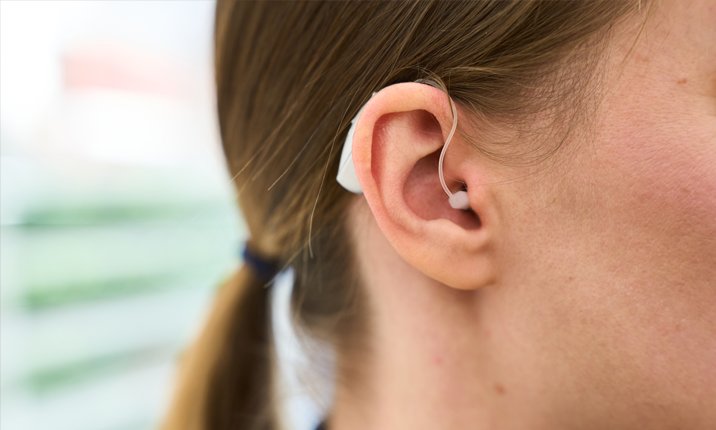
For people with little or no hearing in one ear, CROS (Contralateral Routing of Signals) systems pick up sound from the deaf side and transmit it to the hearing ear. These devices can:
However, they do not restore true two-ear hearing or sound localisation.
Bone-conduction devices transmit sound vibrations through the skull to the better-hearing ear. Like CROS systems, they reroute sound from the deaf side, but they do not restore true two-ear hearing.
Cochlear implants are increasingly being used for SSD in selected patients. Unlike other devices, a cochlear implant stimulates the deaf ear directly, allowing the brain to receive input from both sides again. Potential benefits include:
Not everyone with SSD is suitable for a cochlear implant, and careful assessment is required.
Tinnitus is common in single-sided deafness and can be particularly distressing when only one ear is affected. Restoring sound input – whether through hearing devices or cochlear implants – can significantly reduce tinnitus perception in many patients.
Seek specialist assessment if you experience:
Early evaluation allows for a broader range of treatment options and better outcomes.
There is no single 'best' solution for single-sided deafness. Management should be individualised, taking into account:
A multidisciplinary team involving ENT specialists and audiologists is key to achieving the best outcomes.

The Haze Subsidy Scheme lets eligible Singapore Citizens pay $10 or less for haze-related conditions. See who qualifies, what it covers, and when to seek care.

Haze can inflame your nose and sinuses, especially with allergic rhinitis. Learn how haze affects them, what else it can flare up, and which symptoms need a doctor.

Our breast surgeon explains how to understand your risk, warning signs to know, why screening matters even when you feel well, and what surgery can look like today.

As knee osteoarthritis progresses, everyday activities can become more difficult. Our pain specialist and orthopaedic surgeon explain the treatment options available and how to find the right approach for you.

Dr Edwin Chng from Parkway Shenton explains why weight loss can slow down during medical weight management, and when it may be time to review your treatment plan.

Prostate cancer is common, often silent, and still diagnosed too late in Singapore. Urologist Dr Tan Yung Khan on what every man should know about screening, diagnosis, and treatment.

We answer common questions about haze, and how this can affect common chronic lung conditions such as asthma and chronic obstructive pulmonary disease (COPD), and 8 simple tips to protect ourselves against it.

Our neurosurgeon, Dr Vincent Ng, explains the factors specialists consider when deciding whether a brain aneurysm should be monitored or treated, and what the different treatment options involve.
Mount Elizabeth Hospitals are part of IHH Healthcare, one of the world’s largest integrated healthcare networks.

Download the MyHealth360 app to access an array of medical services conveniently.


Get trusted medical advice from our specialists, dietitians and physiotherapists directly in your inbox.
Subscribe