


 Cancer Care
 Heart Health
 Bone Health
 Brain & Spine Care
 Transplant


Dr Tan Guoping Kelvin
Orthopaedic Surgeon


 Add as a preferred source on Google
Orthopaedic Surgeon

Anaesthesiologist
Knee pain from osteoarthritis can start gradually. Perhaps your knees ache after a long walk, feel stiff after sitting for some time, or climbing stairs feels more uncomfortable than before. But what happens when the pain becomes more frequent or begins interfering with your everyday activities?
Knee osteoarthritis treatment is not one-size-fits-all. Depending on the severity of your condition, your symptoms, lifestyle and treatment goals, options can range from physiotherapy and pain management, to knee preservation procedures or knee replacement surgery.
In this special feature, our orthopaedic surgeon Dr Kelvin Tan from Gleneagles Hospital and pain management specialist Dr Yoong Chee Seng from Mount Elizabeth Novena Hospital team up to explain the different treatment options for knee osteoarthritis, and how specialists determine which may be suitable for you.
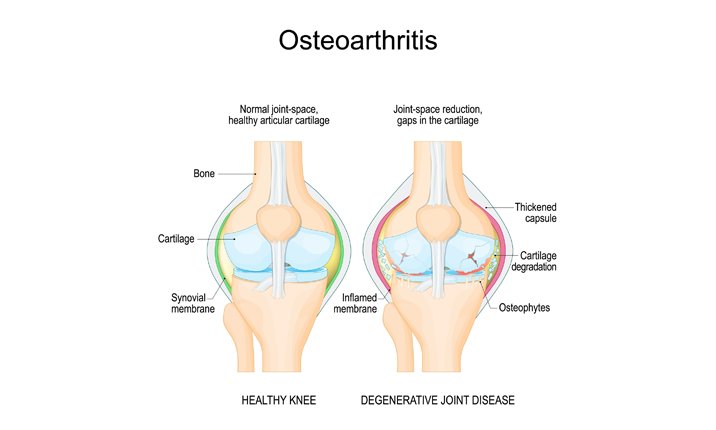
Knee osteoarthritis occurs when the tissues within the knee joint undergo degenerative changes over time. Cartilage, which helps the bones of the knee move smoothly against each other, can become thinner and damaged, while other structures within the joint may also change.
This can result in symptoms such as:
Symptoms do not always correspond directly with the extent of changes seen on an X-ray. Doctors therefore consider how much pain and loss of function you are experiencing, not just what appears on a scan when recommending treatment.
Not necessarily.
Osteoarthritis is often described as a progressive condition, but symptoms can fluctuate. Some people experience relatively stable symptoms for long periods, while others may notice their pain and mobility gradually worsening.
This is also why a diagnosis of knee osteoarthritis does not automatically mean that you need knee replacement surgery.
Treatment is generally tailored according to factors such as your pain, mobility, how the condition affects your daily activities and quality of life, your overall health and how you have responded to previous treatments.
Treatment can broadly be thought of as a spectrum:
However, not everyone progresses through these treatments in this order.
Your specialist will recommend an approach based on your individual condition rather than simply moving you from one treatment to the next.
For many people, particularly when symptoms are manageable, treatment begins without surgery.
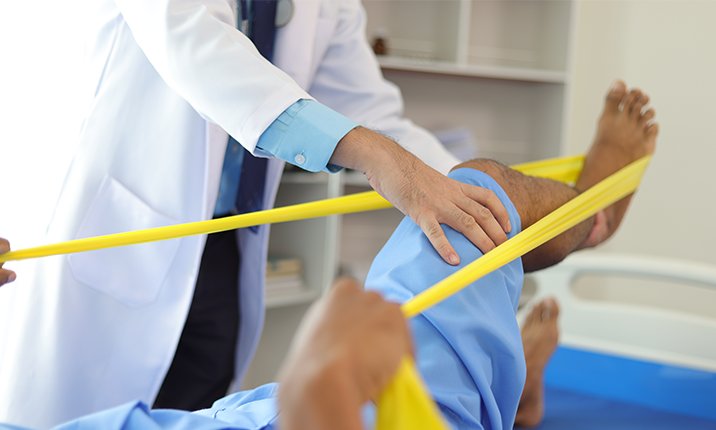
It can be tempting to exercise less when your knee hurts, but appropriate movement remains an important part of knee osteoarthritis management.
A physiotherapist may recommend exercises to strengthen the muscles supporting your knee, improve mobility and help you remain physically active.
The type and intensity of exercise should be tailored to your symptoms and physical ability. Activities such as walking, cycling, swimming or other lower-impact exercises may be suitable for some people.
For people who are overweight, reducing excess body weight can reduce the load placed on the knee and may improve pain and physical function.
Rather than treating weight loss as a stand-alone solution, it is generally considered alongside exercise and other approaches as part of an overall knee osteoarthritis management plan.
Medication may be used to help control pain so that you can continue with daily activities and participate in rehabilitation.
Depending on your health and symptoms, a doctor may consider treatments such as topical or oral non-steroidal anti-inflammatory drugs (NSAIDs).
These medicines are not appropriate for everyone. Your doctor will consider factors such as your age, other medications and medical conditions before recommending them.

Persistent knee osteoarthritis pain does not necessarily mean that surgery is the immediate next step.
A pain management specialist can assess the characteristics and possible sources of the pain, its severity, and how it affects movement, sleep and everyday activities.
This assessment may include reviewing the patient's symptoms, medical history, physical examination findings and imaging results. Because the severity of pain does not always correspond directly with the changes seen on an X-ray, clinical assessment remains an important part of determining the appropriate treatment.
Depending on the patient, treatment may include medication, injections and selected interventional pain procedures. For patients with persistent pain that has not responded adequately to conservative treatment, a pain specialist may consider nerve-targeting procedures targeting the nerves that carry pain signals from the knee.
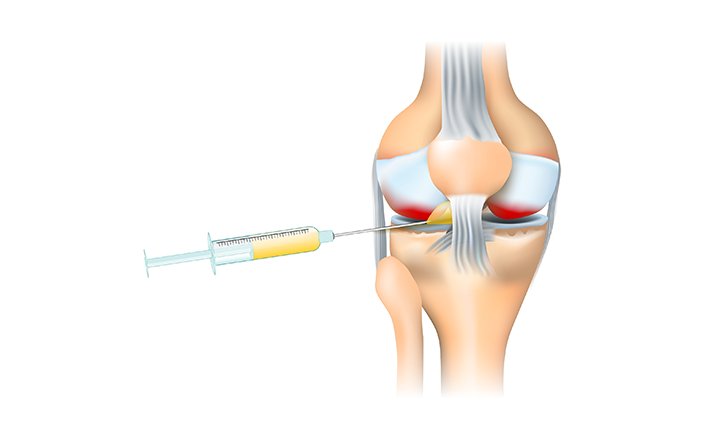
When pain persists despite initial treatment, injections may sometimes be considered.
One option is an intra-articular corticosteroid injection, in which medication is delivered directly into the knee joint to help provide short-term relief of pain and inflammation. Others include hyaluronic based injections which serve to lubricate the knee as well as to reduce inflammation.
However, injections do not reverse the underlying osteoarthritis. Their role should therefore be considered as part of a broader treatment plan rather than as a cure for the condition.
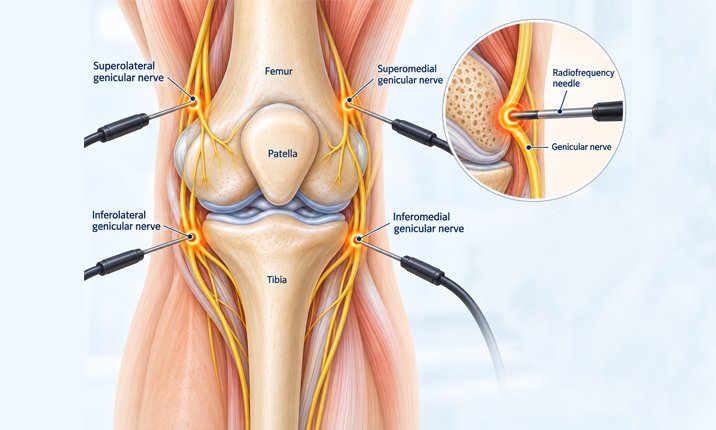
One such treatment is radiofrequency ablation of the genicular nerves. Genicular nerves are sensory nerves around the knee that carry pain signals from the joint. During radiofrequency treatment, targeted energy is applied to selected genicular nerves with the aim of reducing the transmission of pain signals.
Radiofrequency treatment does not repair damaged cartilage or reverse osteoarthritis. Its purpose is to reduce pain and improve function.
It may therefore be considered for selected patients with chronic knee osteoarthritis pain whose symptoms have not responded adequately to more conservative treatments. It may also be an option for some patients for whom surgery is not currently appropriate or who prefer to continue with non-surgical treatment after discussing the available options with their doctors.
For selected patients, effective pain management may reduce symptoms and support mobility without the immediate need for knee replacement. By helping patients remain active and participate in physiotherapy, treatment may also support muscle strength, weight management and overall physical function.
These measures remain valuable if surgery is eventually required, as maintaining strength and general health may support postoperative rehabilitation and recovery.
However, reducing pain does not mean that the structural changes caused by osteoarthritis have been reversed. The goal of pain management is to provide appropriate symptom relief and help the patient maintain function and quality of life, rather than to postpone necessary surgery for as long as possible.
Treatment should therefore be reviewed over time. If pain and loss of function continue to significantly affect everyday life despite appropriate non-surgical treatment, it may be appropriate to discuss surgical options with an orthopaedic surgeon.

There is no single level of pain or X-ray finding that determines when someone should undergo knee surgery.
An orthopaedic surgeon may consider factors including:
Surgery also does not necessarily mean replacing the entire knee.
For selected patients, there may be opportunities to preserve more of the natural knee joint.
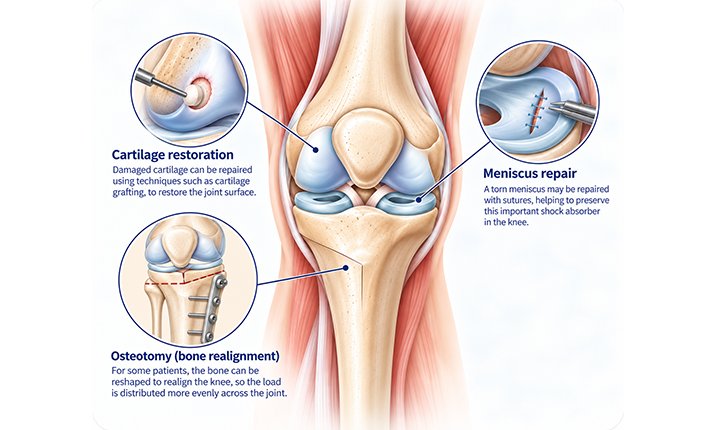
Knee preservation refers to treatments intended to preserve the patient's natural knee joint for as long as appropriately possible.
Rather than replacing the entire joint, the surgeon identifies the particular problem contributing to symptoms and determines whether it can be addressed while retaining the existing knee.
Depending on the patient's condition, knee preservation approaches may include procedures that address cartilage damage, meniscus problems, ligament instability or abnormal alignment of the knee.
Knee preservation is generally more relevant when damage is localised and there are parts of the knee joint that remain suitable for preservation.
For example, a relatively active patient with arthritis concentrated in one part of the knee and an underlying alignment problem may have very different treatment options from someone with advanced osteoarthritis affecting several areas of the joint.
Procedures such as an osteotomy can, in selected patients, change the alignment of the leg so that load is redistributed away from the more damaged part of the knee.
Other joint-preserving procedures may be considered where cartilage, meniscal or ligament problems are contributing to symptoms, in the form of cartilage repair procedures, meniscus repair and/or ligament reconstructive procedures.
However, knee preservation is not suitable for every person with osteoarthritis. Where joint damage is extensive, knee replacement may provide a more appropriate option.
Knee replacement may be considered when osteoarthritis causes persistent pain, stiffness and loss of function that substantially affect quality of life and appropriate non-surgical treatments are no longer providing sufficient relief.
During knee replacement surgery, damaged joint surfaces are replaced with artificial components designed to restore a smoother moving joint.
The goal is not simply to treat what appears on an X-ray. It is to reduce pain and improve function in appropriately selected patients whose symptoms are significantly affecting their lives.
Depending on where the arthritis is located, your surgeon may discuss either a partial or total knee replacement.
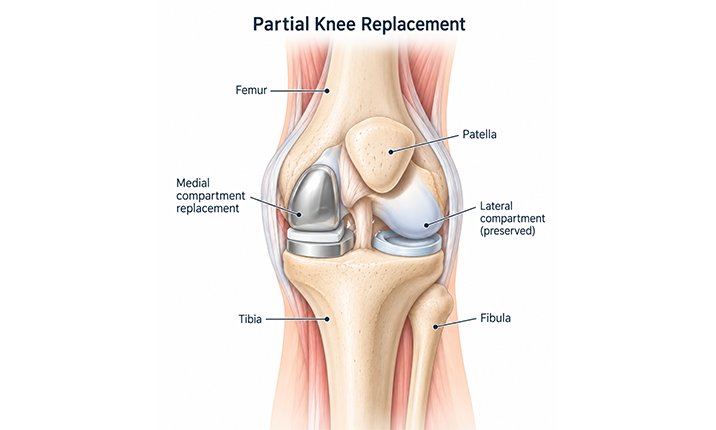
The knee can broadly be divided into different compartments. If osteoarthritis is confined to one compartment and the remaining parts of the knee are suitable, some patients may be candidates for partial knee replacement.
Only the affected portion of the joint is replaced, preserving all the native ligaments and other unaffected compartments, therefore allowing more of the patient's natural knee structures to be retained.
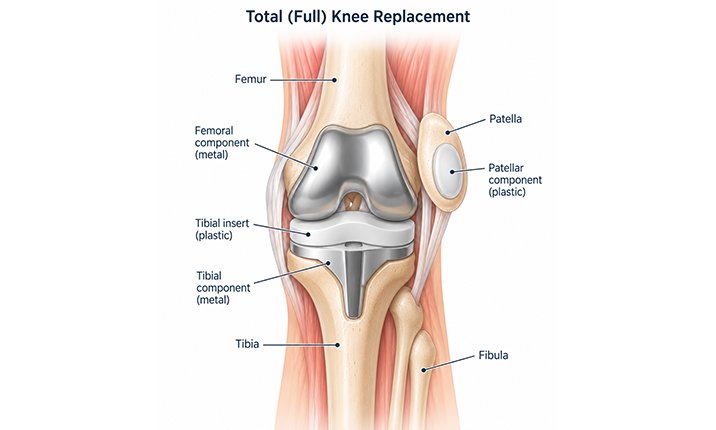
When osteoarthritis is more extensive and affects multiple areas of the knee, total knee replacement may be considered.
During the procedure, damaged joint surfaces at the ends of the thigh bone and shin bone are replaced with prosthetic components, with treatment of the kneecap considered where appropriate.
There is no universal "best" operation for knee osteoarthritis.
The appropriate treatment depends on what is happening inside your knee and how it is affecting you.
A younger or active patient with localised disease and correctable alignment may potentially be considered for a joint-preserving procedure.
Someone with advanced osteoarthritis across several parts of the knee, persistent pain and significant difficulty with everyday activities may be better suited to knee replacement.
And another person with similar X-rays but manageable symptoms may not need surgery at all.
This is why treatment decisions are based on the individual rather than an X-ray alone.
An Enhanced Recovery After Surgery (ERAS) approach may be used to support recovery after knee replacement. It combines measures such as pain management, early mobilisation and physiotherapy to help patients regain movement and function safely after surgery.
Learn more about Enhanced Recovery After Surgery (ERAS) for knee replacement here.

Consider seeking an orthopaedic surgeon's advice if knee pain:
You do not have to wait until your knee pain becomes unbearable before having it assessed.
Understanding the cause and severity of your symptoms earlier can help you discuss the range of appropriate options, whether that means exercise and pain management, a knee-preserving approach or, when appropriate, knee replacement surgery.
There is currently no established treatment that completely reverses osteoarthritis once structural joint changes have occurred. However, symptoms can often be managed through exercise, weight management where appropriate, medication and other treatments. Surgical treatment may be considered when symptoms become more severe.
There is no single best treatment for everyone. Treatment depends on factors such as the severity and location of osteoarthritis, your pain and mobility, overall health, activity level and how previous treatments have worked.
Yes. Appropriate therapeutic exercise is an important part of knee osteoarthritis management. Your doctor or physiotherapist can recommend exercises suited to your symptoms, physical ability and other medical conditions.
Cycling is a lower-impact activity and may be suitable for some people with knee osteoarthritis because it allows the knee to move without the same impact associated with activities such as running. However, the appropriate activity depends on your symptoms and condition, particularly if cycling causes or worsens knee pain.
No. Knee injections may provide symptom relief in selected patients, but they do not reverse the underlying structural changes of osteoarthritis.
No. Radiofrequency treatment targets nerves involved in transmitting pain signals. It may reduce pain in appropriately selected patients but does not repair cartilage or reverse osteoarthritis.
No. Many people with knee osteoarthritis can manage their symptoms without surgery. Surgery is generally considered when symptoms substantially affect function or quality of life and appropriate non-surgical treatments are no longer sufficient or suitable.
Knee preservation procedures may help retain the natural joint and potentially delay the need for knee replacement in appropriately selected patients. They cannot guarantee that knee replacement will never be needed.
Knee replacement may be considered when pain, stiffness and loss of function significantly affect quality of life and appropriate non-surgical treatments no longer provide adequate relief. The decision is made based on the individual rather than a particular age or X-ray finding alone.
This depends on your symptoms and treatment needs. A pain management specialist can assess persistent pain and consider medication, injections and advanced pain procedures where appropriate. An orthopaedic surgeon can assess the structural condition of the knee and whether joint-preserving or replacement surgery should be considered. For some patients, both specialties can contribute to the treatment plan.
At Gleneagles Hospital, our orthopaedic surgeons and pain specialists bring deep expertise in treating knee conditions, providing personalised care to support your recovery.
Book now
Getting a new knee may have sounded like science fiction a few decades ago, but a total knee replacement is now a relatively common procedure.

Not everyone who participates in sports knows about the risks involved – until they get hurt. Here are the top 5 serious sports injuries and how they can be treated.

Complications arising from diabetes and Peripheral Arterial Disease often result in patients losing a limb, but it does not have to be that way.

Professional athletes collect a score of injuries during their career. Singapore Slinger Wong Wei Long shares how he minimises sports injuries on the job.

You can better avoid risks that you know and understand. Here are some common injuries to be mindful of when participating in your favourite sport.

Back pain is increasingly common among office workers who sit down all day. Learn more about 3 spine treatments that can treat your back problems.

Our breast surgeon explains how to understand your risk, warning signs to know, why screening matters even when you feel well, and what surgery can look like today.

As knee osteoarthritis progresses, everyday activities can become more difficult. Our pain specialist and orthopaedic surgeon explain the treatment options available and how to find the right approach for you.

Dr Edwin Chng from Parkway Shenton explains why weight loss can slow down during medical weight management, and when it may be time to review your treatment plan.

Prostate cancer is common, often silent, and still diagnosed too late in Singapore. Urologist Dr Tan Yung Khan on what every man should know about screening, diagnosis, and treatment.

We answer common questions about haze, and how this can affect common chronic lung conditions such as asthma and chronic obstructive pulmonary disease (COPD), and 8 simple tips to protect ourselves against it.

Our neurosurgeon, Dr Vincent Ng, explains the factors specialists consider when deciding whether a brain aneurysm should be monitored or treated, and what the different treatment options involve.
Mount Elizabeth Hospitals are part of IHH Healthcare, one of the world’s largest integrated healthcare networks.

Download the MyHealth360 app to access an array of medical services conveniently.


Get trusted medical advice from our specialists, dietitians and physiotherapists directly in your inbox.
Subscribe