-
-
Our Expertise
 Cancer Care
 Heart Health
 Bone Health
 Brain & Spine Care
 Transplant


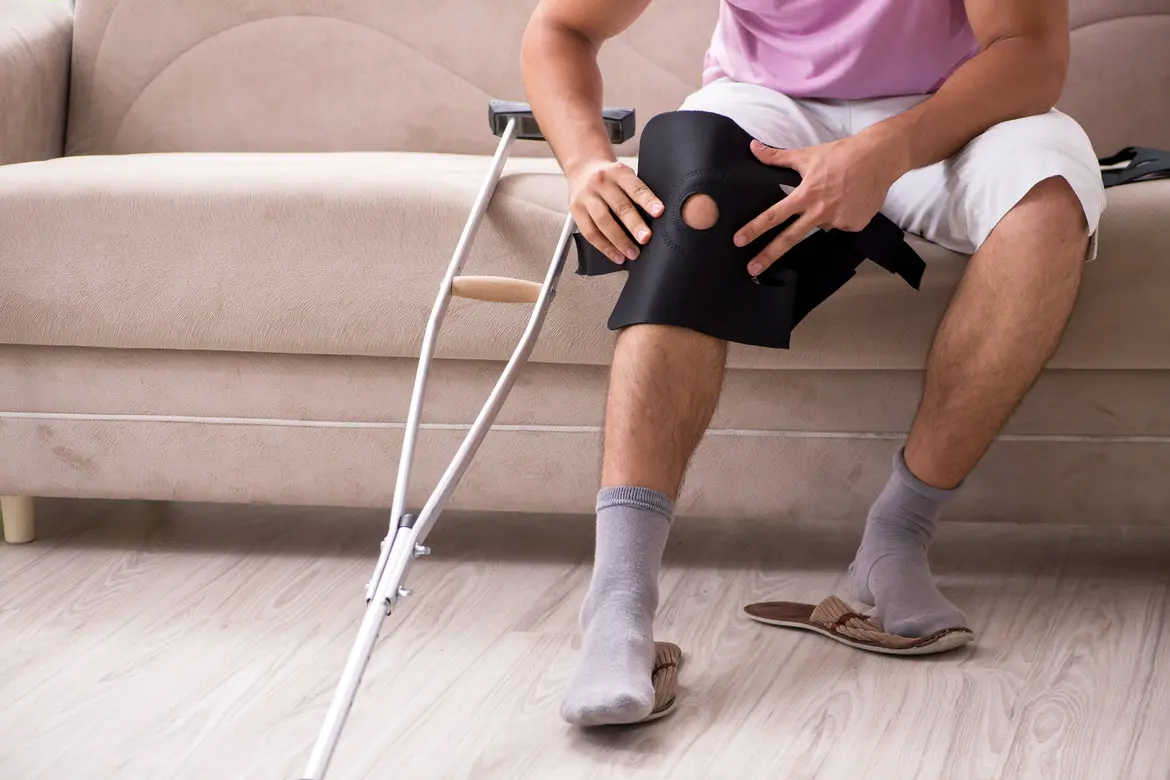
Source: Shutterstock
How to Continue Your Physio at Home
Last updated: Tuesday, May 19, 2020 | 3 min reading time
 Add as a preferred source on Google
Without access to hospital equipment, you can still use a host of everyday objects you have at home for your daily physio exercises.
When you have suffered an injury or have gone through a surgery that limits your physical movement, you will need a trained physiotherapist to help you return to your previous level of activity. Your physiotherapist will prescribe treatments and exercises specific to your condition to help you regain maximum function and movement. To get the best results as fast as possible, you may need to incorporate physio exercises at home to complement the exercises done at the hospital's rehab centre. But is it possible to do your own physio exercises at home, especially if you don't have free weights or fancy machines to help stretch and strengthen your body?
Before you try any of these suggestions, it is important that you speak with a physiotherapist to make sure that they are suitable for your condition.
1. Hand towel to improve grip strength
If you are working with your physiotherapist to strengthen a weakened grip due to conditions like rheumatoid arthritis or carpal tunnel syndrome, you can use a hand towel you have at home to help the muscles around the wrists and hands.
- Roll the hand towel.
- It should be around 2 – 3 inches in diameter.
- Grip and hold for 3 seconds then slowly release.
- Repeat for 10 – 15 repetitions.
2. Rubber band to strengthen muscles around your fingers
Keeping your finger muscles strong can help keep your hands functioning properly. You can do this with exercises using a rubber band. Experiment with different sizes and thickness of a few rubber bands until you get the tension right for each exercise.
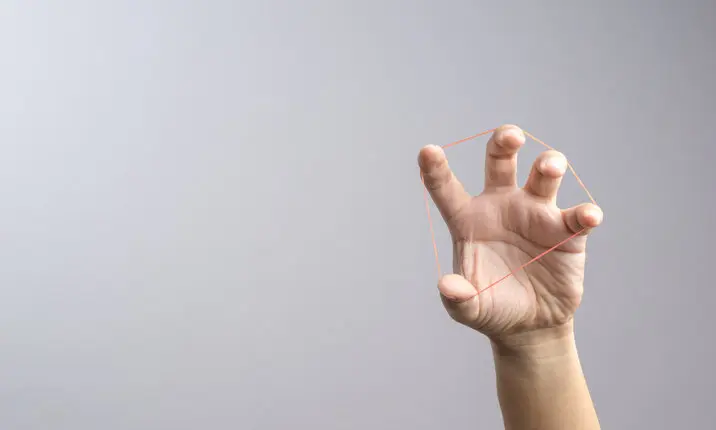
- Place the elastic band around your fingers and thumb and spread them out until you feel resistance from the rubber band.
- Hold that position for 2 seconds before slowly release the tension.
- You can also work on spreading apart just 2 fingers at a time in the same way.
3. Water-filled bottle to strengthen your wrist
Strengthen your wrist or elbow at home with a 500ml bottle. Fill the bottle with water to give it some weight, which is necessary for this exercise. You can increase the intensity of the exercise by placing your grip away from you for as far as you can go.
- Rest your forearm on a table and hold the water bottle upright in your palm.
- Slowly twist your wrist so that your palm faces downward and then twist back to the original position.
- Switch hand and do the same with the other wrist.
- Repeat the movement with each hand for about 10 – 15 times.
4. Bath towel to loosen a frozen shoulder or ease rotator cuff tendonitis and shoulder pain
Your physiotherapist will have prescribed certain exercises to stretch your shoulder and you will need to do these exercises regularly at home so that the loosening starts to take effect. One such exercise is the internal rotation stretch, which you can do with a towel.
- Drape a bath towel over your stiff shoulder and hold one end of the towel in your hand at shoulder level.
- Reach your other hand behind your back and grab the other end of the towel.
- Pull the towel up your back until you feel a stretch in your shoulder.
- Hold the stretch for 15 seconds.
- Repeat this exercise 10 times.
5. Bath towel or bolster for knee and hip injury
If you've had surgery on your knee or hip, or have knee pain, you need to strengthen the muscles around the knee to restore function. You will need to work on the quadricep muscles that cross the knee joint and help straighten it. This can be done with a short arc quad exercise using a bath towel or a bolster to support the back of your knee.
- Use a bolster or roll a bath towel (adjust according to your desired thickness).
- Lie down on your back and place the towel across under your knees.
- Straighten the knee as far as possible and tighten the muscles on the top of your thigh.
- Hold for a few seconds and then slowly lower your legs, keeping it against the bolster or rolled up towel.
Household Items You Can Use for Physical Therapy Home Exercise. Retrieved 14/4/2020 from https://www.verywellfit.com/household-items-you-can-use-to-exercise-2696313
Related Articles
View all
Take Charge, Take Action: Conduct Your Own Breast Examination
A monthly breast self-examination 7 – 10 days after your period starts can save your life.

Should You Exercise when You're Sick?
Can exercise be bad for you when you're ill? Which exercises are safe to do when you're unwell?
5 Unexpectedly Germy Things You Touch Every Day
Do you know what germs are lurking in your home, and are you doing enough to protect yourself from contamination?

All About Heat Exhaustion
What are the signs of heat exhaustion, and what are its potential health risks?

Why Do Weather Changes Make Us Feel Under The Weather?
While changes in weather alone may not make you sick, the change in humidity may weaken your immune system and increase the likelihood of you getting sick.
Can You Clean Your Way to Good Health?
Find out the health benefits of having a clean house and the potential risks of living in clutter.
Latest Articles
View All
Ask our Doctor: What are Breast Cancer Risks and Early Signs?
Our breast surgeon explains how to understand your risk, warning signs to know, why screening matters even when you feel well, and what surgery can look like today.
Knee Osteoarthritis: What To Do When Knee Pain Gets Worse?
As knee osteoarthritis progresses, everyday activities can become more difficult. Our pain specialist and orthopaedic surgeon explain the treatment options available and how to find the right approach for you.

Weight Loss Has Plateaued. Does Your Treatment Need to Change?
Dr Edwin Chng from Parkway Shenton explains why weight loss can slow down during medical weight management, and when it may be time to review your treatment plan.

Ask Our Doctor: How Is Prostate Cancer Detected and Diagnosed?
Prostate cancer is common, often silent, and still diagnosed too late in Singapore. Urologist Dr Tan Yung Khan on what every man should know about screening, diagnosis, and treatment.

A Guide to Haze Season in Singapore: 8 Tips to Stay Healthy
We answer common questions about haze, and how this can affect common chronic lung conditions such as asthma and chronic obstructive pulmonary disease (COPD), and 8 simple tips to protect ourselves against it.

Diagnosed With a Brain Aneurysm? Here's What Happens Next
Our neurosurgeon, Dr Vincent Ng, explains the factors specialists consider when deciding whether a brain aneurysm should be monitored or treated, and what the different treatment options involve.