


-
-
Our Expertise
 Cancer Care
 Heart Health
 Bone Health
 Brain & Spine Care
 Transplant


Source: Shutterstock
Rehabilitation Exercises to Help Rheumatoid Arthritis
Last updated: Friday, May 22, 2020 | 4 min reading time
 Add as a preferred source on Google
Rheumatoid arthritis is among the top 5 chronic conditions among the elderly in Singapore. This condition can be difficult to live with, but rehabilitative exercises can help relieve pain and prevent further joint damage.
Rheumatoid arthritis occurs when one's immune system attacks the body's own tissues by accident, affecting the lining of joints and possibly damaging other body parts. It is an autoimmune disorder that senior citizens are more susceptible to.
Symptoms of rheumatoid arthritis include:
- Joint Stiffness in the morning, persistent pain and discomfort
- Swelling and stiffness, especially in the small joints; eg: hands, fingers, ankle and toes
- Numbness and limitation of joint movements may also occur
Although this is a chronic condition, it can be managed with proper treatment and may go into remission. Treatment includes medication, as well as physical therapy and rehabilitation that will help to keep joints flexible and relieve pain.
While it's best to work with a physiotherapist face to face, this may not be feasible or accessible with the COVID-19 situation. Not to worry though – it's still simple and safe to engage in your own exercises from the comfort of your home. Here are 7 exercises recommended by Samita Dayal, senior physiotherapist at Mount Elizabeth Novena Hospital.
1. Stretching
Stretching should be the foundation for starting your day and before engaging in any exercise because it reduces stiffness and increases your range of motion.
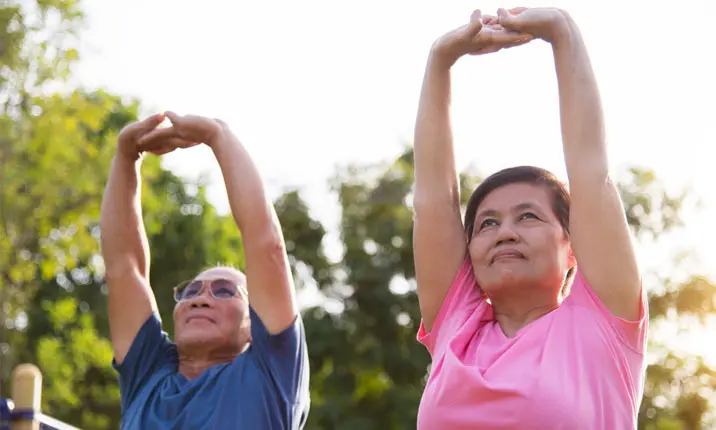
Take 3 – 5 minutes to either march on the spot, reach out to touch the sky, or bend down to touch your toes. Stretch and hold the position for 10 – 20 seconds before releasing, repeating the same motions 3 – 5 times.
2. Chair Sit-to-Stand
Chair sit-to-stand is useful for strengthening your leg muscles. As the exercise's name suggests, all you have to do is sit on a regular chair, stand up, and slowly sit down again with controlled movements.
Feel free to use your arms to help you to balance. Do this for 10 – 15 reps. To increase difficulty, use a chair of a lower height.
3. Yoga and Pilates
Yoga stretches promote a healthy immune system, deep relaxation, and improves one's mobility and flexibility – all of which are essential for recovery. Gentle yoga stretches can reduce joint inflammation and pain in the long run. In fact, any movement-related activities that improve flexibility of your joints is helpful for rehabilitation.
If you're feeling stronger, try Pilates to strengthen and stabilise your joints. Exercises like bridging – with your shoulder on the floor, both knees bent with hips in the air – will train your back and core muscles which make for a good workout.
You may find a wide variety of videos online. Each session can be completed in 30 – 45 mins. A yoga mat is all the equipment you need.
4. Tai Chi
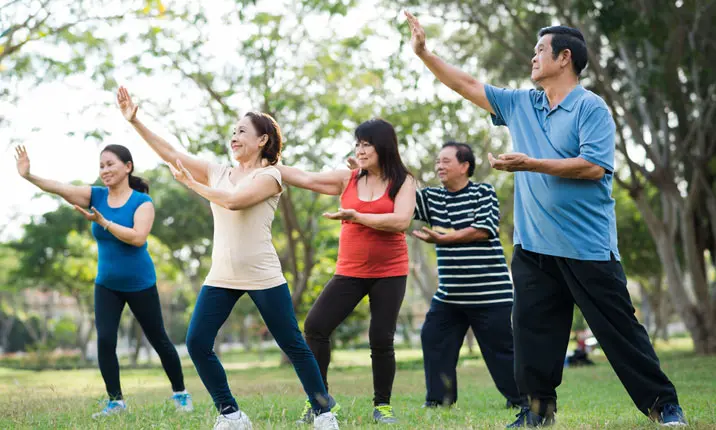
Another flow-based activity, Tai Chi is a traditional Chinese martial art that combines slow and gentle movement with an emphasis on training your focus. Similar to yoga, it improves muscle function and reduce pain as well as stress in recovering patients. Practice Tai Chi daily at home for 20 – 40 mins to strengthen both body and mind.
5. Walking
Although this isn't an indoor sport, it requires minimal effort and can be done right outside your house. Taking a brisk, 15-minute walk around the neighbourhood park can help to loosen joints, reduce pain, and boost your mood. Getting your heart rate up with a dose of fresh air and endorphins will speed up recovery. Just don't forget to wear your mask!
6. Stationary Cycling
Cycling is a non-weight bearing and low impact form of cardiovascular exercise that's suitable for all ages. A study published in the Journal of Rheumatology found that cycling can help to significantly reduce joint pain and stiffness, while promoting a greater range of motion at the hip and knee.
It also strengthens the knee muscles, and can improve the muscular support for joints as well.
7. Hand Exercises
Get active even while seated and watching Netflix – hand exercises and micro-movement are important to regain hand strength, especially since we use our hands to do so many things in our daily lives.
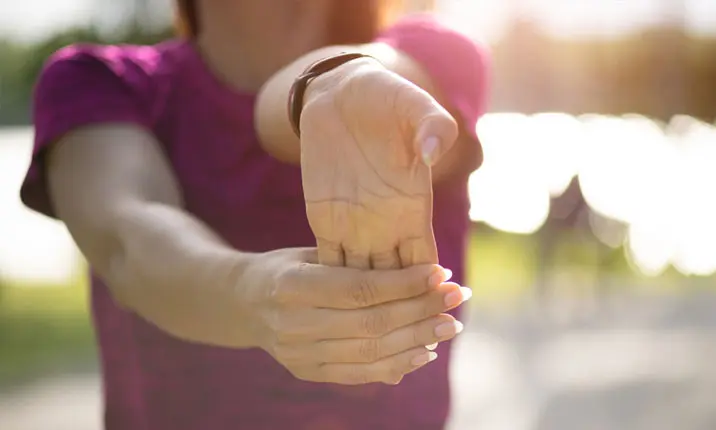
Improve hand flexibility and strength by bending your wrists up and down. Curl your fingers slowly into a fist, and then spread them wide open. Repeat these movements 10 times.
In general, avoid strenuous or high impact exercises that can strain your joints. Take it slow and adapt the exercises to your comfort level.
Do look out for older family members and keep them company while they exercise so that they can sweat it out safely.
Ann Pietrangelo for Healthline (27 September 2018). Early Signs of Rheumatoid Arthritis. Retrieved on 29 April 2020 from https://www.healthline.com/health/early-signs-rheumatoid-arthritis
Benefits of Exercise in Rheumatoid Arthritis. Retrieved 29 April 2020 from https://www.ncbi.nlm.nih.gov/pmc/articles/PMC3042669/
Arthritis Foundation (n.d.). Best Exercises for Rheumatoid Arthritis. Retrieved on 29 April 2020 from https://www.arthritis.org/health-wellness/healthy-living/physical-activity/other-activities/best-exercises-for-rheumatoid-arthritis
Colleen M. Story and Tricia Kinman (26 January 2017). 7 Essential Everyday Exercises to Manage Pain. Retrieved on 29 April 2020 from https://www.healthline.com/health/8-essential-everyday-exercises-for-ra-pain
Karen Pallarito for Explore Health (1 April 2014). 16 Gentle Exercises for People with Arthritis. Retrieved on 29 April 2020 from https://www.health.com/condition/rheumatoid-arthritis/16-gentle-exercises-for-people-with-arthritis
Kat Gál, for Medical News Today (30 August 2018). Best exercises for rheumatoid arthritis pain. Retrieved on 29 April 2020 from https://www.medicalnewstoday.com/articles/322917#tips-for-exercising-with-ra
Mayo Clinic (n.d.). Rheumatoid Arthritis. Retrieved on 29 April 2020 from https://www.mayoclinic.org/diseases-conditions/rheumatoid-arthritis/symptoms-causes/syc-20353648
rheumatoidarthritis.net (n.d.). Exercise & Rehabilitation. Retrieved on 29 April 2020 from https://rheumatoidarthritis.net/treatment/exercise-and-rehabilitation/
William C. Shiel Jr for MedicineNet (n.d.). 16 Early Signs and Symptoms of Rheumatoid Arthritis (RA). Retrieved on 29 April 2020 from https://www.medicinenet.com/rheumatoid_arthritis_early_symptoms/article.htm
Related Articles
View all
Life Without Arthritis: Total Knee Replacement
Getting a new knee may have sounded like science fiction a few decades ago, but a total knee replacement is now a relatively common procedure.
Worst Sports Injuries
Not everyone who participates in sports knows about the risks involved – until they get hurt. Here are the top 5 serious sports injuries and how they can be treated.

Diabetes and Amputation: How to Save Your Leg
Complications arising from diabetes and Peripheral Arterial Disease often result in patients losing a limb, but it does not have to be that way.

How Singapore Slinger Wong Wei Long Copes with Sports Injuries
Professional athletes collect a score of injuries during their career. Singapore Slinger Wong Wei Long shares how he minimises sports injuries on the job.
Top 3 Common Sports Injuries
You can better avoid risks that you know and understand. Here are some common injuries to be mindful of when participating in your favourite sport.

Suffering from Back Pain? Here are 3 Procedures that might Improve Your Life
Back pain is increasingly common among office workers who sit down all day. Learn more about 3 spine treatments that can treat your back problems.
Latest Articles
View All
Ask our Doctor: What are Breast Cancer Risks and Early Signs?
Our breast surgeon explains how to understand your risk, warning signs to know, why screening matters even when you feel well, and what surgery can look like today.

Knee Osteoarthritis: What To Do When Knee Pain Gets Worse?
As knee osteoarthritis progresses, everyday activities can become more difficult. Our pain specialist and orthopaedic surgeon explain the treatment options available and how to find the right approach for you.

Weight Loss Has Plateaued. Does Your Treatment Need to Change?
Dr Edwin Chng from Parkway Shenton explains why weight loss can slow down during medical weight management, and when it may be time to review your treatment plan.

Ask Our Doctor: How Is Prostate Cancer Detected and Diagnosed?
Prostate cancer is common, often silent, and still diagnosed too late in Singapore. Urologist Dr Tan Yung Khan on what every man should know about screening, diagnosis, and treatment.

A Guide to Haze Season in Singapore: 8 Tips to Stay Healthy
We answer common questions about haze, and how this can affect common chronic lung conditions such as asthma and chronic obstructive pulmonary disease (COPD), and 8 simple tips to protect ourselves against it.

Diagnosed With a Brain Aneurysm? Here's What Happens Next
Our neurosurgeon, Dr Vincent Ng, explains the factors specialists consider when deciding whether a brain aneurysm should be monitored or treated, and what the different treatment options involve.


