-
-
Our Expertise
 Cancer Care
 Heart Health
 Bone Health
 Brain & Spine Care
 Transplant

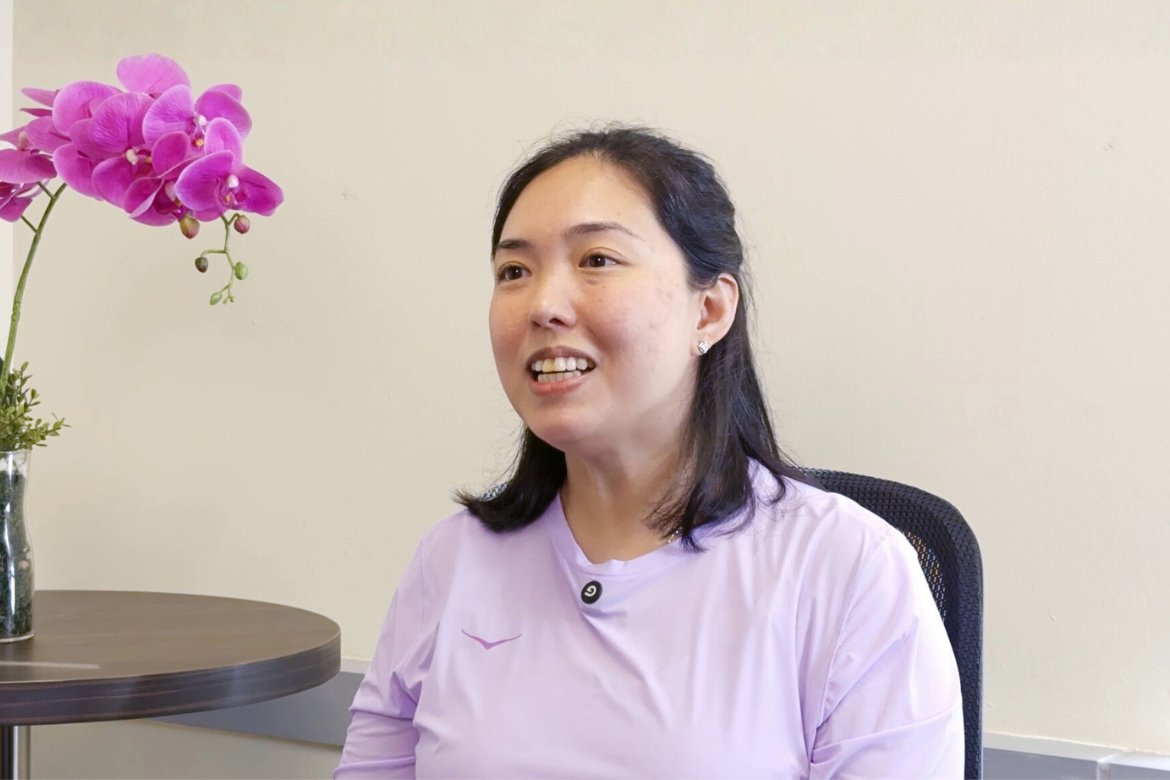
When Stroke Strikes Young: Tracy’s Road to Recovery
Last updated: Tuesday, March 3, 2026 | 6 min reading time
After a stroke at 35, Tracy Ong began a long road to recovery — relearning how to move, speak and live independently, one step and one day at a time.
At 35, Tracy Anne Ong from Cebu, Philippines never imagined she would have to learn how to swallow, speak, or walk again. A massive stroke changed everything — stripping away her independence, mobility, and even her ability to communicate. Once a lawyer and bookstore owner, Tracy suddenly found herself paralysed and dependent on medical support for the most basic functions.
What followed was far from a straightforward recovery. It was a long, deeply human journey shaped by advanced brain and spine care, comprehensive rehabilitation, and a level of resilience that would come to define her healing.
Severe stroke in the prime of life
Stroke is often associated with older age, but Tracy’s experience is a reminder that it can strike without warning, even in the prime of life.
When Tracy arrived in Singapore for treatment after the COVID-19 pandemic, her condition was severe.
She was paralysed on the right side of her body, her left arm was extremely weak, and she could barely speak. Swallowing was impossible without assistance, requiring a feeding tube, and she needed additional support for basic bodily functions.
For Tracy — someone accustomed to independence and intellectual work — the stroke’s impact was profound, and the sudden loss of control was deeply frightening.
What is a stroke?
A stroke happens when blood flow to a part of the brain is suddenly interrupted, either by a blockage or a ruptured blood vessel. Without a steady supply of oxygen and nutrients, brain cells begin to die within minutes.
The impact of a stroke varies from person to person, depending on which part of the brain is affected and how quickly treatment is received.
Stroke is commonly thought of as a condition that affects older adults, but it can occur at any age.
When it happens in younger individuals, the effects can be particularly confronting, disrupting movement, speech, swallowing, balance, and cognition at a time when independence is often taken for granted.
Early medical care is vital in reducing the risk of long-term disability and ensuring rehabilitation can begin as soon as possible, when the brain is most responsive to recovery.
The first critical step: Stabilising the brain
Stroke recovery begins with protecting the brain from further damage.
Under the care of neurologist Dr Lee Kim En at Mount Elizabeth Hospital, Tracy’s condition was stabilised through personalised neurological care. Early intervention focused on monitoring brain function, preventing further injury, and understanding the full extent of her impairments.
Within two days, Tracy was stable enough to leave the Intensive Care Unit (ICU) and begin early stroke rehabilitation. This critical phase takes advantage of the brain’s neuroplasticity, when it is most capable of relearning lost movement, speech, and function.
Learning to swallow and speak again
One of Tracy’s earliest rehabilitation challenges was swallowing, a function most people take for granted.
Working closely with speech therapist Tan Hui Yong, Tracy underwent intensive speech and swallowing therapy. This involved carefully structured exercises, behavioural strategies, and adaptive techniques designed to retrain weakened muscles and restore coordination.
“I explored all kinds of techniques and strategies, whether from books or developed over the course of my career, with one determination: to help Tracy regain her ability to swallow again,” Tan Hui Yong shares.
Progress was slow and demanding. Over six weeks to two months, Tracy gradually regained the ability to swallow safely, allowing her feeding tube to be removed. With that came another monumental victory: the return of speech, and with it, the ability to express herself again.
Relearning movement through physiotherapy
Once discharged, Tracy began the next phase of recovery — learning how to move again.
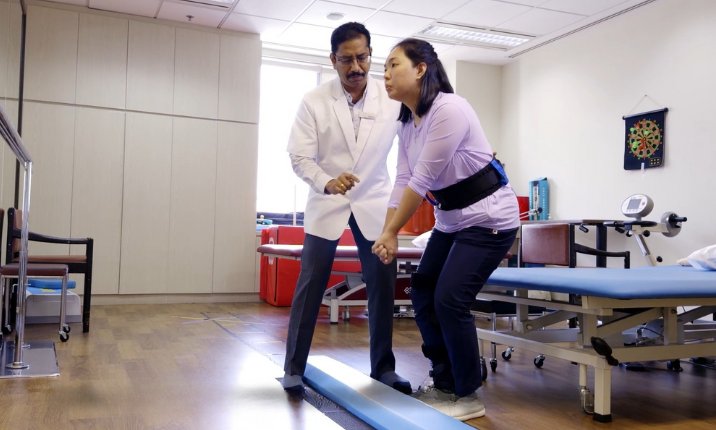
Under the guidance of S G Sivakummar, a clinical specialist in neuroscience physiotherapy, Tracy embarked on an intensive physiotherapy programme.
At this stage, she was unable to sit or stand independently. Muscle tone on her affected leg was abnormal, balance was poor, and walking had to be relearned from the ground up.
“We focused on exercises to improve weight-bearing on her weaker leg, as well as some stepping exercises and walking exercises, which we call gait training or gait re-education.” Siva explains.
Her rehabilitation also included muscle tone normalisation to relax and activate weakened muscles, functional electrical stimulation to improve foot clearance while walking.
Each movement required concentration, repetition, and persistence. Progress was measured not in leaps, but in small, hard-won steps.
“What struck me most about Tracy was her resilience,” Siva adds. “Giving up is just not in her dictionary.”
Regaining independence with occupational therapy
Stroke recovery does not end with walking — it extends into every other aspect of daily life.
Through occupational therapy with Arabelle Wei, Tracy worked to rebuild independence in everyday tasks like writing, holding objects and managing daily routines. Because her right arm had little functional movement, therapy focused on adapting activities and strengthening her ability to use her left hand.
Tracy shares. “I’m still learning how to speak better, and how to do everyday things like writing again.”
After six months of beginning her therapy, the changes were remarkable. Tracy regained finger movement and was able to write again — first with her left hand, and eventually with improving function in her right.
“By the end of six months, with all the intensive rehab[ilitation] and all the practices that she has done,” Arabelle Wei notes, “she’s able to use the fingers, use the hand to write, and there were movements in the fingers coming.”
Tracy came to the realisation that recovery was not just about regaining function, but about adapting to a new way of living.
Her care team consistently noted her determination, strong learning behaviour, and refusal to give up. These qualities played a vital role in her progress, helping her push through plateaus and setbacks.
Recovery beyond the hospital
The most moving part of Tracy’s recovery happened beyond therapy sessions.
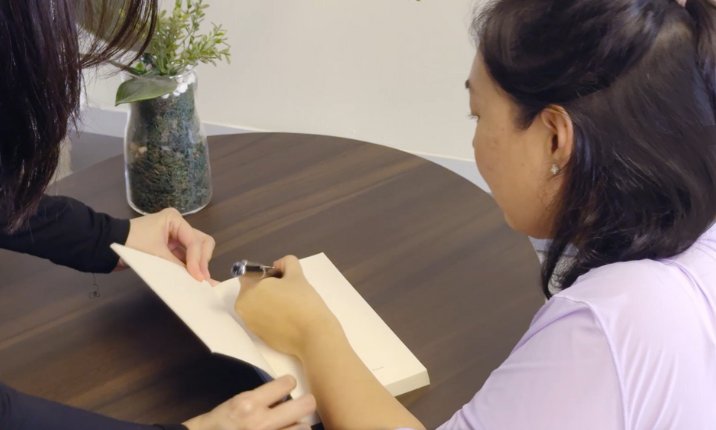
She learned to paint using her left hand, and wrote a book, Tethered, which was painstakingly crafted word by word. More than a year after her stroke, she surprised her neurologist with a handwritten note; this time written with her right hand.
“I recommend it [Tethered] to anyone who has suffered a stroke, or who cares for someone with stroke,” Dr Lee Kim En recalls.
These moments were not just clinical achievements. They were expressions of reclaiming identity and purpose after the stroke.
What Tracy’s journey reveals about stroke recovery
Tracy’s journey shows that stroke recovery is rarely about returning to who you were before. It is about discovering who you can become after.
With timely brain and spine care and coordinated rehabilitation, recovery is within reach. But it requires patience, perseverance and the courage to celebrate every step forward as a victory – no matter how small.
“My life before and after is vastly different,” Tracy reflects. “It’s more meaningful now.”
Mount Elizabeth Brain & Spine Care: Possible Starts Today
When it comes to your brain and nervous system, even small symptoms can feel overwhelming. At Mount Elizabeth Hospital, you don’t have to navigate them alone. Our experienced neurosurgeons are here to listen, assess, and guide you towards the right care — helping you take control of your health with confidence.
Find a specialistRelated Articles
View all
How to Prevent a Stroke
Most strokes are preventable. Dr Michael Lim, cardiologist, talks about the importance of prevention and what you should do.

Coffee, Yay or Nay? Here's What Caffeine really Does to Your Heart and Brain
Your morning cup does way more than boost your energy. Dr Ooi Yau Wei talks about how caffeine affects your health.
Alzheimer’s Disease: Everything You Need to Know
Alzheimer’s disease is a growing cause for concern for Singaporeans. In this article, find out what it actually is and how you can treat it.

Losing Your Memory: Normal Ageing or Dementia?
Memory loss may be a normal part of ageing, but it may also be caused by dementia or treatable brain conditions. Getting the right diagnosis and care is important.

How Do You Recognise a Stroke?
Every minute counts when it comes to recovering from a stroke. Recognise the warning signs and know what to do when you see them.

How to Treat Chronic Migraine
Migraines are not just simply bad headaches. Chronic migraine can be extremely debilitating. Learn how to manage migraine and get it treated.