


-
-
Our Expertise
 Cancer Care
 Heart Health
 Bone Health
 Brain & Spine Care
 Transplant


Source: Shutterstock
What's Key to Surviving Breast Cancer?
Last updated: Wednesday, March 24, 2021 | 5 min reading time
 Add as a preferred source on Google
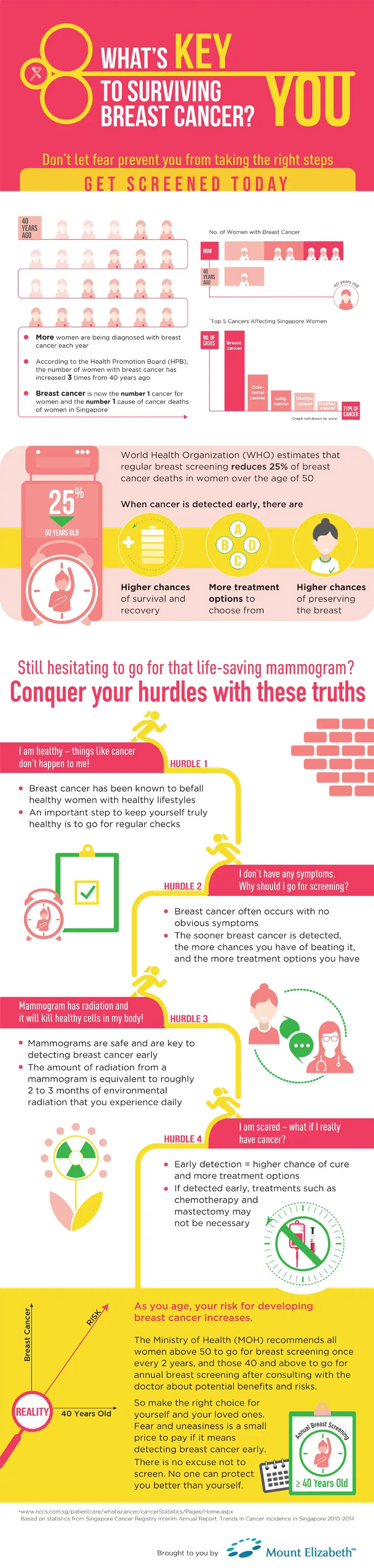
More women are being diagnosed with breast cancer each year. According to the Health Promotion Board (HPB), the number of women with breast cancer has increased 3 times from 40 years ago. Breast cancer is now the leading cancer for women and the number 1 cause of cancer deaths of women in Singapore.
The World Health Organization (WHO) estimates that regular breast screening reduces 25% of breast cancer deaths in women over the age of 50. When cancer is detected early, there are higher chances of survival and recovery, more treatment options to choose from, and higher chances of preserving the breast.
Unfortunately, fear is still a hurdle for many women when choosing to go for a mammogram, the key to early detection of breast cancer.
Here are some truths to remember, if you are still hesitating to get screened.
Hurdle #1: "I am healthy – things like cancer don't happen to me!"
- Cancer is not selective
- Breast cancer has been known to befall healthy women with healthy lifestyles
- An important step to keep yourself truly healthy is to go for regular checks
Hurdle #2: "I don't have any symptoms. Why should I go for screening?"
- Breast cancer often occurs with no obvious symptoms
- The sooner breast cancer is detected, the more chances you have of beating it and the more treatment options you have
Hurdle #3: "Mammogram has radiation and it will kill healthy cells in my body!"
- Mammograms are safe and are key to detecting breast cancer early
- The amount of radiation from a mammogram is equivalent to roughly 2 – 3 months of average background radiation
Hurdle #4: "I am scared – what if I really have cancer?"
- Early detection = higher chance of cure and more treatment options
- When detected early enough, you might not even have to go for chemotherapy and mastectomy
Reality: As you age, your risk for developing breast cancer increases.
The Ministry of Health (MOH) recommends all women above 50 to go for breast screening once every 2 years, and those above 40 to go for annual breast screening after consulting with their doctors about the potential benefits and risks.
So – make the right choice for yourself and your loved ones. Fear and uneasiness is a small price to pay if it means detecting breast cancer early. There's no excuse not to screen. It's your life and no one can protect it better than you.
Related Articles
View all
Take Charge, Take Action: Conduct Your Own Breast Examination
A monthly breast self-examination 7 – 10 days after your period starts can save your life.

Too Busy to Have a Baby? Chances & Health Risks of Pregnancy After 40
For those who may be planning on having a baby only after they step over the magic number of 40, here are some issues to consider.

What You Should Know About Fibroids and Fertility
Dr Kelly Loi discusses fibroids, how they affect fertility in women, and the ways to identify, evaluate and manage fibroids.

Shedding Light on Breast Conserving Surgery
A breast cancer diagnosis does not mean having to lose your breast, now that many treatment options are available.

Myth busted! 8 Common Myths About Breast Screening
Eight myths you might believe about breast cancer screening, and the truth about it.

Know a Woman Above 40? Encourage Them to Take This Positive Step
More women are being claimed by breast cancer now than before. Love them by encouraging them to go for breast screening.
Latest Articles
View All
Ask our Doctor: What are Breast Cancer Risks and Early Signs?
Our breast surgeon explains how to understand your risk, warning signs to know, why screening matters even when you feel well, and what surgery can look like today.

Knee Osteoarthritis: What To Do When Knee Pain Gets Worse?
As knee osteoarthritis progresses, everyday activities can become more difficult. Our pain specialist and orthopaedic surgeon explain the treatment options available and how to find the right approach for you.

Weight Loss Has Plateaued. Does Your Treatment Need to Change?
Dr Edwin Chng from Parkway Shenton explains why weight loss can slow down during medical weight management, and when it may be time to review your treatment plan.

Ask Our Doctor: How Is Prostate Cancer Detected and Diagnosed?
Prostate cancer is common, often silent, and still diagnosed too late in Singapore. Urologist Dr Tan Yung Khan on what every man should know about screening, diagnosis, and treatment.

A Guide to Haze Season in Singapore: 8 Tips to Stay Healthy
We answer common questions about haze, and how this can affect common chronic lung conditions such as asthma and chronic obstructive pulmonary disease (COPD), and 8 simple tips to protect ourselves against it.

Diagnosed With a Brain Aneurysm? Here's What Happens Next
Our neurosurgeon, Dr Vincent Ng, explains the factors specialists consider when deciding whether a brain aneurysm should be monitored or treated, and what the different treatment options involve.


