


 Cancer Care
 Heart Health
 Bone Health
 Brain & Spine Care
 Transplant


Chew Chun Yang
Family Physician

Family Physician
If you have been following health news lately, you have probably heard about GLP-1 medications such as Ozempic, Wegovy, and Mounjaro. From social media to medical journals, these weight loss injections are often described as a breakthrough in weight management.
But beyond the headlines, what do these treatments actually do? Who are they suitable for? And what should you realistically expect?
Here’s a clearer look at how GLP-1 medications work if you’re considering medical weight loss in Singapore.
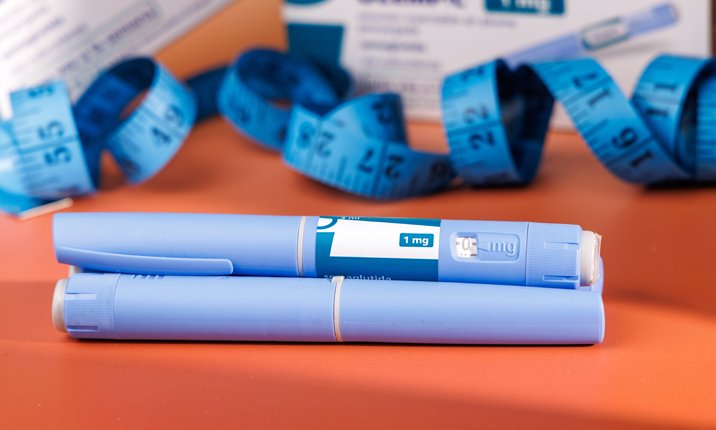
GLP-1 stands for glucagon-like peptide-1, a hormone your body naturally produces after meals. It helps to:
GLP-1 medications work by mimicking this natural hormone. Examples include:
By influencing how your body regulates hunger and satiety, GLP-1 medications help you feel satisfied sooner and stay full for longer. Cravings may reduce, and portions often become smaller.
In simple terms, these medications help your body regulate appetite more effectively, rather than relying solely on willpower.
In general, GLP-1 medications may be prescribed if you:
They are not suitable for individuals who are pregnant, breastfeeding, or have a personal or family history of medullary thyroid cancer (MTC) or multiple endocrine neoplasia type 2 (MEN2).
Getting a medical consultation first is essential. Your doctor will review your health history, medications and treatment goals before starting therapy.
If you’re unsure whether you are suitable, speak to our doctors at Parkway Shenton for an assessment and personalised recommendation.
This is a common question, as many people considering weight management treatment are also taking medication for other chronic conditions.
In most cases, GLP-1 medication can be used safely with proper monitoring.
Your doctor will assess your overall clinical profile before recommending whether GLP-1 treatment is suitable for you.
Results vary from person to person.
When combined with lifestyle changes, patients may achieve around 10 – 15% weight reduction over 12 – 18 months.
The aim is gradual weight loss rather than rapid transformation. This helps minimise potential health risks such as nutritional deficiencies and loss of lean muscle mass.
Just as important is building sustainable habits that help maintain the weight loss achieved. Healthier eating patterns, regular physical activity, and learning to manage appetite can reduce the risk of weight rebound often cited when patients stop or reduce the dose of medications.
A broader perspective of healthspan also has to be kept in mind. Weight management is not only about the number on the scale. A whole-person approach takes into account physical and psychological health, as well as socio-cultural factors such as work routines, social habits and food preferences. Interventions should be balanced, sustainable, and even enjoyable.
Many patients begin to notice an improvement in energy levels and confidence within the first three months of treatment.
From a medical perspective, the main goal of treatment is to improve cardiometabolic control. Even a modest 5% reduction in body weight can lead to measurable improvements in your blood sugar, cholesterol, blood pressure and overall metabolic health.
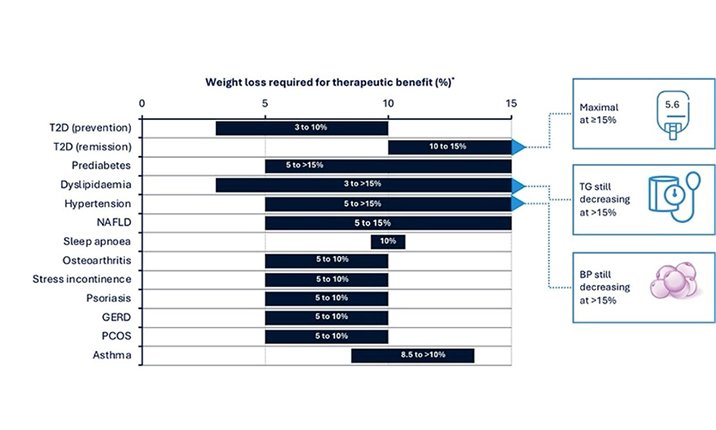
Adapted from: AACE/ACE Obesity CPG, Endocr Pract. 2016;22(Suppl 3); Cefalu et al. Diabetes Care 2015;38:1567–82; Lean et al. Lancet 2018;391:541–51; le Roux et al. Lancet. 2017 Apr 8;389(10077):1399-1409; Mahil SK, et al. Br J Dermatol. 2019 Nov;181(5):946-953; Dias-Junior et al. Eur Respir J. 2014;43(5):1368-77.
Yes. While GLP-1 medication helps regulate appetite, healthy lifestyle habits remain vital.
Rather than strict dieting, you are advised to:
In fact, you can still enjoy local favourites such as chicken rice or nasi lemak – just in smaller portions.
For patients on our Parkway Shenton medical weight management programme, our nurse counsellors, dietitians and fitness partners will work closely with you to tailor a practical plan that fits your lifestyle and daily routine.

Most people tolerate GLP-1 treatment well. Common side effects include:
These are usually mild and tend to improve over time, especially when the dose is increased gradually.
Do note that overeating, particularly during festive meals, may increase nausea while your body is adjusting to treatment.
Rare but important risks include pancreatitis, gallstones or gallbladder issues, and worsening of advanced diabetic eye disease in certain individuals. Because GLP-1 medications slow stomach emptying, it is important to inform your doctor before undergoing surgery or procedures that require sedation.
Long-term studies have shown sustained benefits and safety with appropriate medical monitoring, so be sure to use GLP-1 medication only under close supervision by your doctor.
Weight loss medication is not a one-time prescription. Regular follow-up helps ensure the treatment remains safe and effective.
Your doctor will typically monitor:
Follow-ups are usually scheduled every two to three months initially, then spaced further apart (e.g. every six months) once your condition is stable. These appointments allow our doctor to track progress, adjust doses where needed, and manage any side effects early to ensure both your safety and sustained results.

When GLP-1 medication is stopped, appetite often returns and some weight regain may occur.
This does not mean treatment has failed. For some individuals, obesity behaves like a chronic condition that requires ongoing management.
Long-term success depends on the habits built during treatment. Some patients continue on low-dose maintenance therapy. Others transition to alternative strategies or medications based on their individual goals.
There is no fixed end point, as the treatment plan is entirely personalised to your goals and health profile.
Remember, GLP-1 medications are not magic injections. They are medical treatments designed to support appetite regulation and metabolic health.
When used appropriately, and combined with balanced eating, regular exercise and ongoing follow-up, they can help you move past repeated cycles of dieting and weight regain.
If you have been struggling despite your best efforts, speak with a doctor to explore whether GLP-1 medication may be suitable for you as part of our Parkway Shenton medical weight management programme.

More and more people today are developing diabetes. Dr Daniel Wai, endocrinologist, talks about the ways to avoid it from the latest research.

Fat-free or gluten-free food does not necessarily mean low in calories. Here are 8 foods you didn't think were calorie-dense.

Many people feel guilty for eating too much, or even dread stepping on the scales after the holidays. But occasional overeating is unlikely to have a long-term impact on your health – and here's why.
Dr Desmond Wai explains fasting and its effectiveness for detox, weight loss and other health conditions.

Without a doubt, one of the best things about Chinese New Year is the food. But is there a way to indulge without sabotaging your healthy diet?

Why is it that one person can eat hundreds of calories and stay the same weight, while another person can eat the same and gain more?
Mount Elizabeth Hospitals are part of IHH Healthcare, one of the world’s largest integrated healthcare networks.

Download the MyHealth360 app to access an array of medical services conveniently.


Get trusted medical advice from our specialists, dietitians and physiotherapists directly in your inbox.
Subscribe