


-
-
Our Expertise
 Cancer Care
 Heart Health
 Bone Health
 Brain & Spine Care
 Transplant


Source: Shutterstock
Heart Truth #2: Everything in Moderation
Last updated: Wednesday, November 28, 2018 | 2 min reading time
 Add as a preferred source on Google
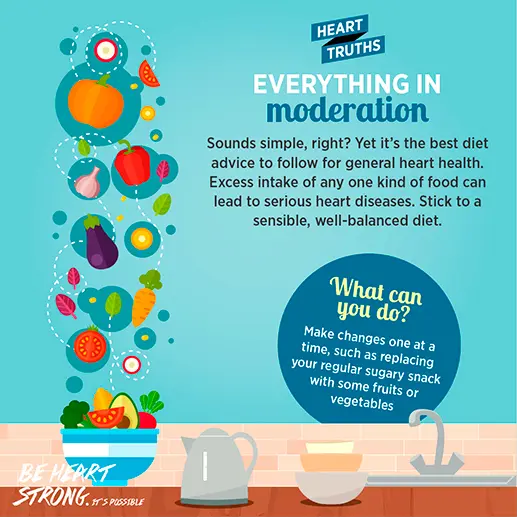
Sounds simple, right? Yet it's the best diet advice to follow for general heart health. Excess intake of any one kind of food can lead to serious heart diseases.
Eat and drink well. Like a car, your body needs good quality fuel to run smoothly. Stick to a sensible, well-balanced diet:
- Cut out the junk – choose food that's lower in fat, salt and sugar where possible
- Include starchy foods in your diet – bread, rice, potatoes and pasta (wholegrain varieties, if possible)
- Each day, select a variety of nutritious food from all the food groups.
- Aim for at least 5 portions of fresh fruit and veggies per day
- Eat more seafood instead of meat, especially oily fish as it has more heart-healthy omega-3 fats
- Drink plenty of water and limit your intake of alcohol
Start adapting your diet gradually. A sudden crash diet isn't much help when you want to change your long-term heart health. Make changes one at a time, such as replacing your regular sugary snack with some fruits or vegetables. Get your family, friends or colleagues on board to help support you too.
Find out some of the medical procedures available should you need to undergo heart treatment. With the correct insurance coverage, your bill size can be better gauged and managed, while Mount Elizabeth Hospitals can assist with all Medisave, MediShield Life and Integrated Shield Plan claims.
For your peace of mind, talk to one of our heart specialists today or read about how to make healthcare insurance claims to cover your hospital bills.
Related Articles
View all
Sudden Cardiac Death in Modern Day Athletes
This is a phenomenon that has been rearing its head much more in recent years. Athlete or not, it is important to understand its possible causes.

How Can I Stop a Heart Attack?
Heart attacks are the 2nd most common cause of death after cancer in Singapore – but help is available for if you are diagnosed and treated early.

Is Your Job Bad for Your Heart?
Various kinds of jobs create different types of stress, and whether the stress becomes harmful depends on the individual.

Diabetes and Amputation: How to Save Your Leg
Complications arising from diabetes and Peripheral Arterial Disease often result in patients losing a limb, but it does not have to be that way.

Sports Heart Expert Tells All
It’s not unusual to hear of professional athletes suffering a heart attack at the peak of their game. Cardiologists can provide expert advice to athletes.
Top Heart Operations to Beat Heart Disease
We recommend the most common heart operations to beat heart disease.
Latest Articles
View All
Ask our Doctor: What are Breast Cancer Risks and Early Signs?
Our breast surgeon explains how to understand your risk, warning signs to know, why screening matters even when you feel well, and what surgery can look like today.

Knee Osteoarthritis: What To Do When Knee Pain Gets Worse?
As knee osteoarthritis progresses, everyday activities can become more difficult. Our pain specialist and orthopaedic surgeon explain the treatment options available and how to find the right approach for you.

Weight Loss Has Plateaued. Does Your Treatment Need to Change?
Dr Edwin Chng from Parkway Shenton explains why weight loss can slow down during medical weight management, and when it may be time to review your treatment plan.

Ask Our Doctor: How Is Prostate Cancer Detected and Diagnosed?
Prostate cancer is common, often silent, and still diagnosed too late in Singapore. Urologist Dr Tan Yung Khan on what every man should know about screening, diagnosis, and treatment.

A Guide to Haze Season in Singapore: 8 Tips to Stay Healthy
We answer common questions about haze, and how this can affect common chronic lung conditions such as asthma and chronic obstructive pulmonary disease (COPD), and 8 simple tips to protect ourselves against it.

Diagnosed With a Brain Aneurysm? Here's What Happens Next
Our neurosurgeon, Dr Vincent Ng, explains the factors specialists consider when deciding whether a brain aneurysm should be monitored or treated, and what the different treatment options involve.


