Cancer Care
 Heart Health
 Bone Health
 Brain & Spine Care
 Transplant


Joy Marie Lim
Medical Advisor

Source: Shutterstock
 Add as a preferred source on Google
Medical Advisor
The COVID-19 pandemic has changed how we live and breathe. While the vaccines give us hope, the emergence of new virus variants is a constant cause for concern. As such, we are encouraged to stay vigilant towards for COVID-19 or other respiratory symptoms that may require medical attention.
While you may be able to identify the more common symptoms of COVID-19, it has been reported that sometimes oxygen levels may start to drop even before any symptoms would appear. Oximeters are devices that can help track your oxygen levels and detect cases with “silent pneumonia", one of the most serious consequences of COVID-19.
In this article, we cover the significance of blood oxygen levels and other important facts you need to know about pulse oximeters.
Blood oxygen saturation, commonly shown as SpO₂, measures how much oxygen your blood is carrying compared to its full capacity.
Oxygen travels through your bloodstream to supply organs and tissues throughout your body. When oxygen levels drop too low, your organs may not receive enough oxygen to function properly.
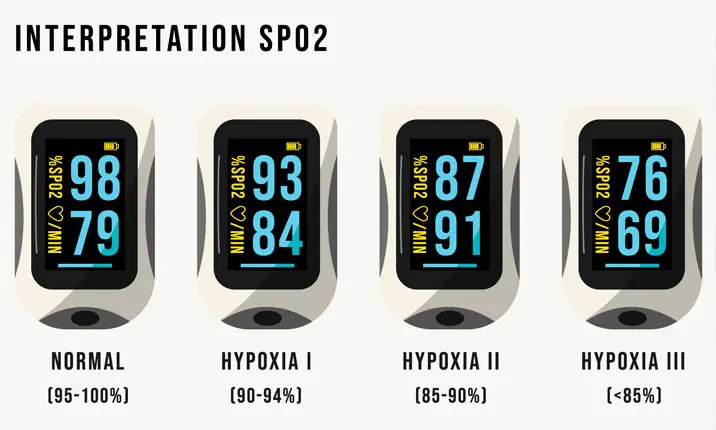
These are normal oxygen levels for most healthy adults and children, according to the World Health Organization:
When you’re exposed to COVID-19, your lungs are one of the major organs to be affected. Damage to the lungs can cause the oxygen in your blood to drop to dangerously low levels, even when you feel generally well, or present no other symptoms of the virus. This is known as “silent pneumonia” and if left untreated, can lead to very serious consequences.
Hypoxemia refers to the low level of oxygen in your blood. It can cause hypoxia (low oxygen in your tissues), which means not enough oxygen is making it to the cells in the body that need it.
Fatigue or shortness of breath, bluish colouring in the face and lips, restlessness, chest pain, and a rapid pulse rate are some typical symptoms of low blood oxygen in your body.
But in some cases, you may show no symptoms. Silent hypoxia occurs when a pulse oximetry test on a person with no symptoms of low blood oxygen, results in an oximetry reading that is lower than what is considered normal. This occurrence has recently been observed in a large number of individuals diagnosed with COVID-19. Hypoxia, if not detected early, can cause serious damage to your major organs and lead to the disease worsening.
Apart from COVID-19, asthma, heart disease, and chronic obstructive pulmonary disease (COPD) are some other conditions that can impact blood oxygen levels.
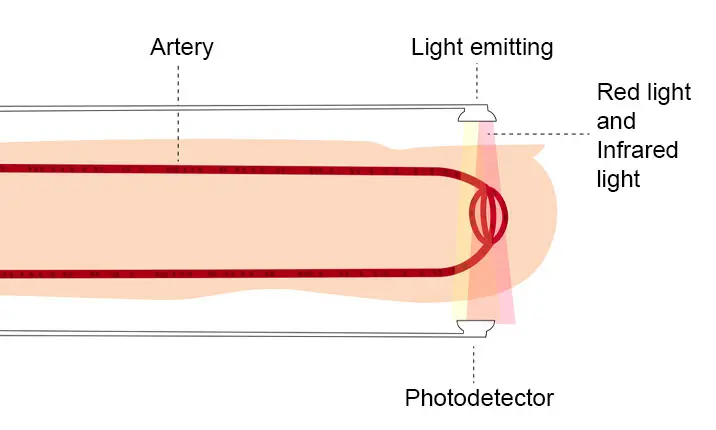
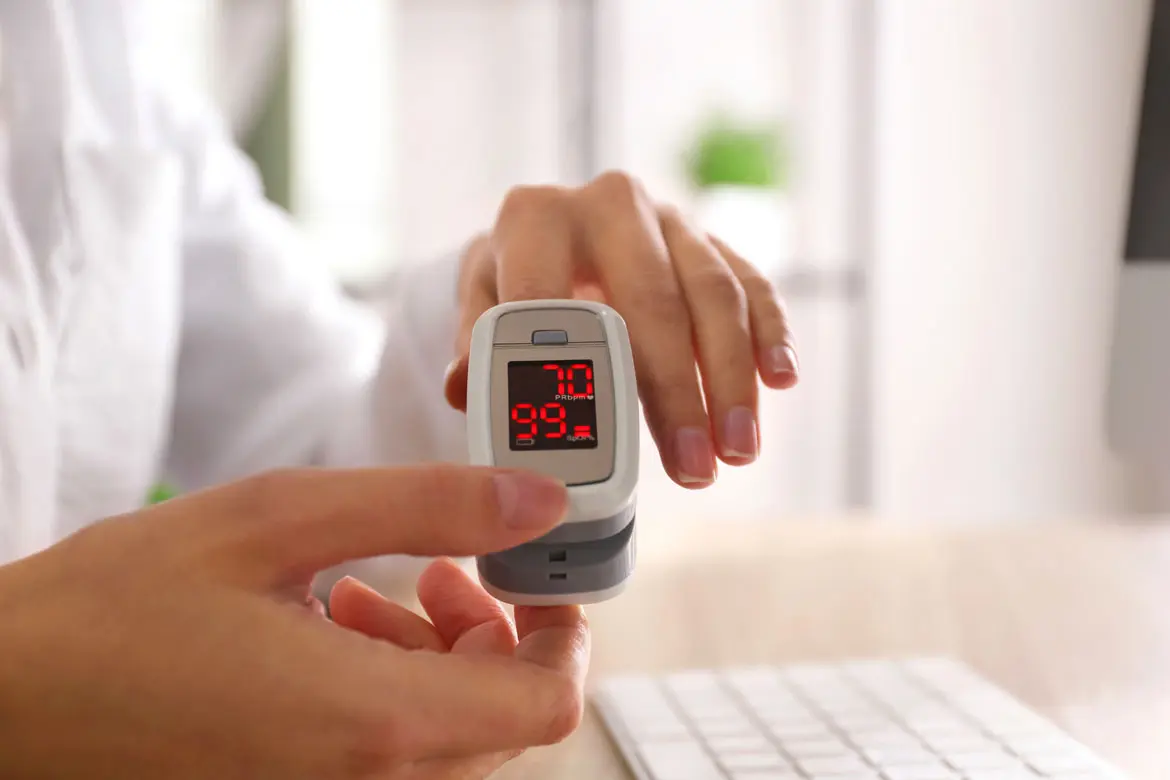
A pulse oximeter is a portable device that can be used to check blood oxygen levels by looking at how much light is absorbed by your blood. The oximeter works by shining 2 lights (one red light and one infrared light) through your fingertip. Absorption of these lights can differs significantly between blood loaded with oxygen and blood lacking oxygen. Oxygen-rich blood absorbs more infrared light, allowing more red light to pass through it. Blood with low oxygen tends to absorb more red light and lets more infrared light pass through it. It is fast, simple, non-invasive and painless (needle-free).
Using an oximeter at home can help you check your blood oxygen levels and indicate when prompt medical attention is warranted.
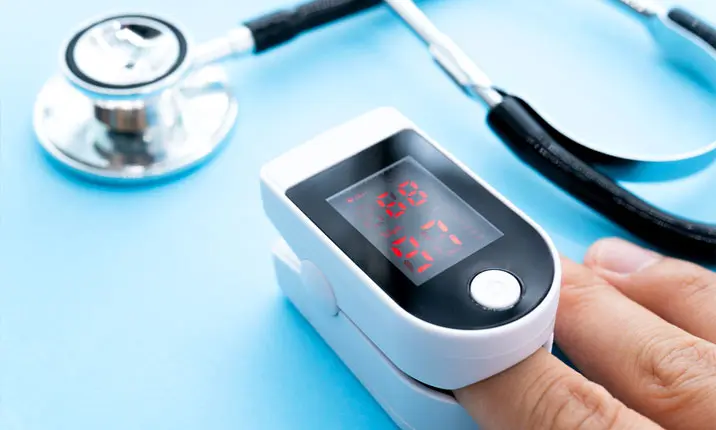
An oximeter is a user-friendly device, with a small clip that can be placed at the end of your finger. In some cases, it is also placed on the toe or earlobe. To achieve the best results, it is recommended to place the oximeter on your right hand’s middle finger.
Follow these steps for a more accurate reading:
The screen will show your SpO₂ level, and sometimes your pulse rate.
When using an oximeter at home, you should always keep a record of your oxygen levels in case you need to show it to your doctor. These records can help you easily track changes and highlight any abnormal values. Along with the oximeter readings, it is important to look out for the symptoms of low oxygen levels.
Pulse oximeters are generally reliable, but certain factors can affect the readings. Several factors such as poor circulation, skin thickness, smoking, and fingernail polish can affect accuracy.
If your reading seems unusually low, try repeating the test after warming your hands and sitting still.
Oximetry is a non-invasive and painless (needle-free) method. There is also no radiation involved. You may be concerned when considering tests on babies, however, they are safe to use.
Oximeters are a critical tool in determining oxygen needs in newborns, especially those with medical conditions such as congenital heart defects and respiratory abnormalities. However, adult oximeters may not be the right dimensions for use on a baby.
Paediatric pulse oximeters are generally used for children. They work the same way as adult oximeters but the paediatric device is designed to fit smaller fingers. In infants and young children, handheld paediatric oximeters are used, with probes are placed on the child’s palm or foot.
Oximeter readings between 95% – 100% are in the normal range for healthy children. If their blood oxygen level falls below 95% or you have concerns about their oxygen levels, you should consult your child’s paediatrician for medical advice.
After reading about oximeters, you may be wondering if they can be replaced with smartwatches or fitness trackers.
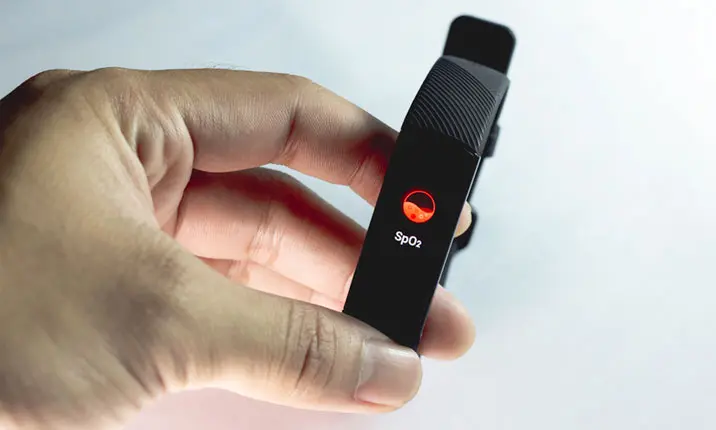
Though several smartwatches or fitness trackers are equipped to measure blood oxygen levels, readings on smartwatches are not always accurate. They cannot check blood oxygen levels to medical levels of accuracy because the sensors are just not designed or tested for medical use, while medical-grade pulse oximeters are much more reliable.
Placement or the way you wear the smartwatch can also affect its accuracy. In pulse oximetry, transmission mode is used – oximeters are clipped onto your finger and the blood flow is close to the surface. Light emitted on one side of the oximeter travels to a sensor on the other side. But, in smartwatches, reflectance approach is used – both the light source and sensor are on one side of your wrist and relies on the light that bounces back. The blood vessels in the wrist can also complicate the readings.
Smartwatches and fitness trackers may be used to first estimate blood oxygen levels. If it looks low, you may want to check again with an oximeter to get more accurate readings or consult a healthcare professional.
Certain groups of people may be more likely to experience low blood oxygen levels, including:
You should consult a doctor for medical advice if:
If you are managing COVID-19 or other respiratory symptoms at home, consult a doctor if your blood oxygen level drops below 95% or if you develop low blood oxygen symptoms.
A: Oximeters mainly show the SpO2 (%) – your blood oxygen saturation level. For healthy adults and children, a level of 95% - 100% is normal, while it is recommended to see a doctor if the SpO2 falls below 95% as this indicates that the blood oxygen level is low.
A: Haze can irritate the airways and lungs because it contains fine particles (PM2.5) and other pollutants. It may cause symptoms such as coughing, throat irritation, or shortness of breath. If breathing becomes difficult during periods of poor air quality, oxygen levels may be affected.
A: You may use a pulse oximeter to check your oxygen levels if you have respiratory symptoms such as difficulty breathing or fatigue, are recovering from respiratory infections such as pneumonia or tuberculosis, or have lung or heart conditions affecting breathing.

More and more people today are developing diabetes. Dr Daniel Wai, endocrinologist, talks about the ways to avoid it from the latest research.

Although exams may be a stressful period for everyone at home, it doesn't have to take a toll on your child's health. Here are 6 ways to make sure your child is in their best condition for the exams.

9 healthy activities that you can do as a family to strengthen family ties, kill boredom and improve your overall health at the same time.

Dr Leonard Ang, ophthalmologist, guides you on the causes of pink eye (conjunctivitis) and what to do when it occurs.

Someone around you starts wheezing and coughing vigorously. What should you do?

Not all play needs to be focused around education. During the holidays, playing just for fun can have its own health benefits for your child. Here are some of them.

Our breast surgeon explains how to understand your risk, warning signs to know, why screening matters even when you feel well, and what surgery can look like today.

As knee osteoarthritis progresses, everyday activities can become more difficult. Our pain specialist and orthopaedic surgeon explain the treatment options available and how to find the right approach for you.

Dr Edwin Chng from Parkway Shenton explains why weight loss can slow down during medical weight management, and when it may be time to review your treatment plan.

Prostate cancer is common, often silent, and still diagnosed too late in Singapore. Urologist Dr Tan Yung Khan on what every man should know about screening, diagnosis, and treatment.

We answer common questions about haze, and how this can affect common chronic lung conditions such as asthma and chronic obstructive pulmonary disease (COPD), and 8 simple tips to protect ourselves against it.

Our neurosurgeon, Dr Vincent Ng, explains the factors specialists consider when deciding whether a brain aneurysm should be monitored or treated, and what the different treatment options involve.
Mount Elizabeth Hospitals are part of IHH Healthcare, one of the world’s largest integrated healthcare networks.

Download the MyHealth360 app to access an array of medical services conveniently.


Get trusted medical advice from our specialists, dietitians and physiotherapists directly in your inbox.
Subscribe