-
-
Our Expertise
 Cancer Care
 Heart Health
 Bone Health
 Brain & Spine Care
 Transplant



Mount Elizabeth Precision Medicine Hub
Overview
Healthcare built around you, not the average patient
Precision health uses your genetic information and clinical history to help you and your doctors make better-informed decisions about prevention, diagnosis and treatment.
At Mount Elizabeth Precision Medicine Hub in Orchard brings together genomic insights, specialist expertise and coordinated care across the hospital, so you get joined-up care, not a series of separate tests.
Understanding your health at a deeper level
No two people are the same, and neither is their risk of disease or the way they respond to medicine. Precision health looks at what makes you different, so your care can be planned around it.
| Know your risk earlier | Get the right treatment, sooner | Protect your family |
|---|---|---|
| Understand whether you may be more likely to develop certain conditions, so prevention or monitoring can start before symptoms appear. | Genetic insights can help clarify a diagnosis and guide which medicines and treatments suit you best, with less trial and error. | Some conditions run in families. Understanding yours can help relatives get the right advice and screening too. |
Your results, read against Asian data
A genome is only as informative as the population it is compared against. That is why results for Asian patients are best read against Asian data, by doctors who see Asian patients every day.
Why it matters
Most genetic research has been done in people of European ancestry, and people of Asian ancestry are more likely to get an “uncertain” result. Singapore is now building its own genomic reference from local residents, so Asian results can be read against Asian data.
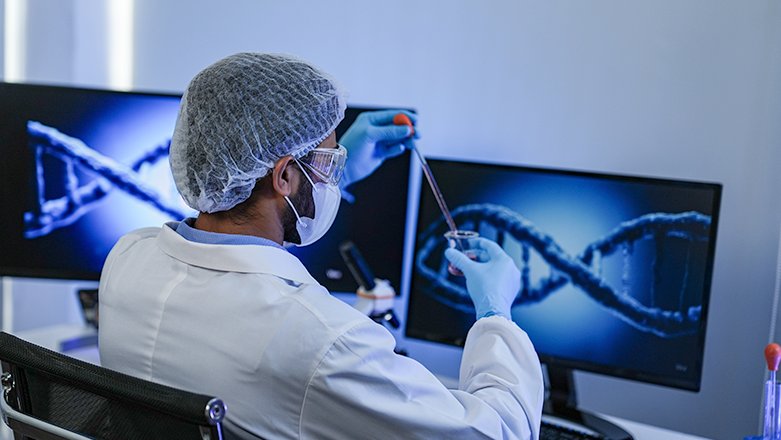
Our doctors know what is common here
Diagnosing a condition begins with recognising the signs and knowing what to look for. Our doctors see Asian patients every day, so they know which conditions are more prevalent and what to look out for. That can shorten a years-long search for answers.
What our genes tell us about people in Asia*
- About 1 in 30 (3.4%) carry a gene change that doctors can act on, such as with earlier screening or treatment.
- Nearly everyone (99.7%) carries at least one gene variant that can affect how they respond to certain medicines.
- More than 1 in 4 (26.8%) carry a gene variant that raises the risk of a life-threatening reaction to certain medicines.
- About 1 in 200 couples (0.5%) is at risk of having a child with a serious inherited condition, even when both parents are healthy.
*Source for the four statistics above: Chan et al., Nature Communications 2022 (SG10K_Health genomes of Singapore residents).
Your journey in six steps
1. Referral or enquiry
Your attending doctor (GP or specialist) can refer you if a genetic or genomic assessment may be right for you, and stays involved throughout. You can also make an appointment or enquiry yourself: Call +65 6737 2666 or email precisionmedicine@mountelizabeth.com.sg.
2. Assessment and genetic counselling
Our team will help you understand the purpose, benefits, and considerations of testing.
3. Sample collection and analysis
You provide the sample required for testing, and it will be analysed by our accredited laboratory.
4. Results and interpretation
Our team of specialists reviews your results in the context of your clinical history.
5. Follow-up care
Your doctor discusses the findings and next steps with you, including advice for family members where relevant.
Our partners: Lucence, RheaHealth
When to ask about precision health
Speak to your doctor about precision health if:
- you or close relatives have had cancer, heart disease, a rare disease or a neurological condition at a younger age than expected, or in several family members
- you or your child have a condition that has not been explained
- you have had a serious reaction to a medicine
- you are planning a pregnancy and want to understand your carrier risk
- you have done a direct-to-consumer genetic test and would like the results explained by clinicians
- you are interested to optimise your health
Contact us
Mount Elizabeth Precision Medicine Hub
Address:
Mount Elizabeth Hospital
3 Mount Elizabeth
Singapore 228510
Main line:
Opening hours:
Monday to Friday:
9.00am – 12.30pm
2.00pm – 4.30pm
Saturday: 9.00am – 12.30pm
Sunday & Public Holidays: Closed
In this section
Latest Articles
View All
Ask our Doctor: What are Breast Cancer Risks and Early Signs?
Our breast surgeon explains how to understand your risk, warning signs to know, why screening matters even when you feel well, and what surgery can look like today.

Knee Osteoarthritis: What To Do When Knee Pain Gets Worse?
As knee osteoarthritis progresses, everyday activities can become more difficult. Our pain specialist and orthopaedic surgeon explain the treatment options available and how to find the right approach for you.

Weight Loss Has Plateaued. Does Your Treatment Need to Change?
Dr Edwin Chng from Parkway Shenton explains why weight loss can slow down during medical weight management, and when it may be time to review your treatment plan.

Ask Our Doctor: How Is Prostate Cancer Detected and Diagnosed?
Prostate cancer is common, often silent, and still diagnosed too late in Singapore. Urologist Dr Tan Yung Khan on what every man should know about screening, diagnosis, and treatment.

A Guide to Haze Season in Singapore: 8 Tips to Stay Healthy
We answer common questions about haze, and how this can affect common chronic lung conditions such as asthma and chronic obstructive pulmonary disease (COPD), and 8 simple tips to protect ourselves against it.

Diagnosed With a Brain Aneurysm? Here's What Happens Next
Our neurosurgeon, Dr Vincent Ng, explains the factors specialists consider when deciding whether a brain aneurysm should be monitored or treated, and what the different treatment options involve.