-
-
Our Expertise
 Cancer Care
 Heart Health
 Bone Health
 Brain & Spine Care
 Transplant



Source: Shutterstock
Heart Truth #3: Weighing the Risks
Last updated: Monday, December 21, 2020 | 2 min reading time
 Add as a preferred source on Google
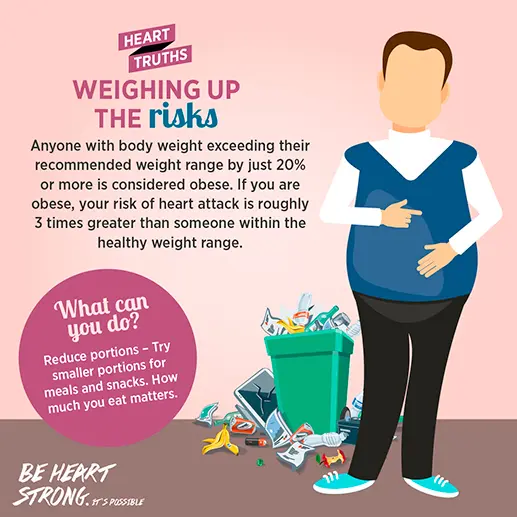
While you might not be hugely overweight, that doesn't mean you shouldn't be concerned. Anyone with body weight exceeding their recommended weight range by just 20% or more is considered obese. And once you hit that mark, your risk of heart attack is roughly 3 times greater than that of someone within the healthy weight range.
Being overweight or obese can:
- Raise your cholesterol levels
- Increase your blood pressure
- Increase your risk of developing diabetes
All of which put you at greater risk of heart disease.
Did you know that the leading cause of death by far among diabetics is diabetic heart disease? A high blood sugar level predisposes diabetics to more artery blockages throughout the body, and they also tend to have a very poor cholesterol profile.
So how do you maintain a healthy weight or lose weight? It’s not rocket science – try smaller portions for meals and snacks. How much you eat matters.
Going for preventive heart screening is an effective way to identify hidden heart health risks.
For your peace of mind, talk to one of our heart specialists today or read about how to make healthcare insurance claims to cover your hospital bills.
Related Articles
View all
Sudden Cardiac Death in Modern Day Athletes
This is a phenomenon that has been rearing its head much more in recent years. Athlete or not, it is important to understand its possible causes.

How Can I Stop a Heart Attack?
Heart attacks are the 2nd most common cause of death after cancer in Singapore – but help is available for if you are diagnosed and treated early.

Is Your Job Bad for Your Heart?
Various kinds of jobs create different types of stress, and whether the stress becomes harmful depends on the individual.

Diabetes and Amputation: How to Save Your Leg
Complications arising from diabetes and Peripheral Arterial Disease often result in patients losing a limb, but it does not have to be that way.

Sports Heart Expert Tells All
It’s not unusual to hear of professional athletes suffering a heart attack at the peak of their game. Cardiologists can provide expert advice to athletes.

Top Heart Operations to Beat Heart Disease
We recommend the most common heart operations to beat heart disease.
Latest Articles
View All
Ask our Doctor: What are Breast Cancer Risks and Early Signs?
Our breast surgeon explains how to understand your risk, warning signs to know, why screening matters even when you feel well, and what surgery can look like today.

Knee Osteoarthritis: What To Do When Knee Pain Gets Worse?
As knee osteoarthritis progresses, everyday activities can become more difficult. Our pain specialist and orthopaedic surgeon explain the treatment options available and how to find the right approach for you.

Weight Loss Has Plateaued. Does Your Treatment Need to Change?
Dr Edwin Chng from Parkway Shenton explains why weight loss can slow down during medical weight management, and when it may be time to review your treatment plan.

Ask Our Doctor: How Is Prostate Cancer Detected and Diagnosed?
Prostate cancer is common, often silent, and still diagnosed too late in Singapore. Urologist Dr Tan Yung Khan on what every man should know about screening, diagnosis, and treatment.

A Guide to Haze Season in Singapore: 8 Tips to Stay Healthy
We answer common questions about haze, and how this can affect common chronic lung conditions such as asthma and chronic obstructive pulmonary disease (COPD), and 8 simple tips to protect ourselves against it.

Diagnosed With a Brain Aneurysm? Here's What Happens Next
Our neurosurgeon, Dr Vincent Ng, explains the factors specialists consider when deciding whether a brain aneurysm should be monitored or treated, and what the different treatment options involve.